
Industrial Carbon Nanotubes Products
Showing 13–14 of 14 results
-
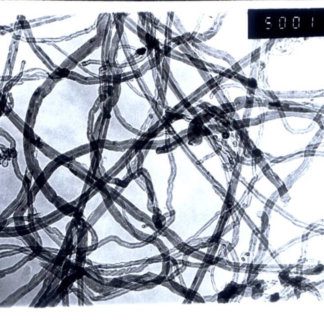
OH Functionalized Industrial Grade Multi Walled Carbon Nanotubes 10-30nm
$365.00 - $435.00 / per KG Select options -
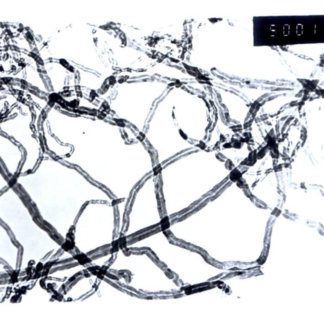
OH Functionalized Industrial Grade Multi Walled Carbon Nanotubes 20-40nm
$385.00 - $400.00 / per KG Select options
Industrial Grade Carbon Nanotubes: High Volume at Lower Cost
Industrial grade carbon nanotubes are produced at larger scale using catalytic chemical vapor deposition (CCVD) with less intensive post-processing than research-grade MWCNTs. The result is a material with higher residual catalyst content (iron, cobalt, or nickel) and more amorphous carbon than standard research grades — but at significantly lower cost per kilogram. For commercial applications where CNT purity is less critical than cost-efficiency at scale, industrial CNT grades deliver the electrical, mechanical, and thermal performance needed at pricing that makes large-volume production economically viable.
Cheap Tubes offers industrial CNTs as dry powders, pre-dispersed masterbatches in common thermoplastics, and epoxy composite additives, allowing customers to choose the product form that best matches their manufacturing process.
Industrial CNTs vs. Research Grade MWCNTs
| Property | Industrial CNTs | Research Grade MWCNTs |
|---|---|---|
| Carbon Purity | 85–95% | 90–99%+ |
| Residual Catalyst | 5–15% | <5% |
| Outer Diameter | 10–40 nm | 8–50 nm (various grades) |
| Electrical Conductivity | 10²–10⁴ S/m | 10³–10⁷ S/m |
| Price | $85–600/kg | $10–50/g |
| Min. Order Quantity | 100g–1kg | 1g |
| Typical Applications | Composites, coatings, ESD | Research, specialty composites |
CNT Masterbatches
Carbon nanotube masterbatches are pre-compounded pellets containing 5–20 wt% CNTs dispersed in a carrier polymer — ABS, PA6 (Nylon 6), polycarbonate (PC), or polypropylene (PP). Masterbatches solve the most difficult practical challenge with CNT composites: achieving uniform dispersion in the final polymer matrix. Rather than handling dry CNT powder (dusty, difficult to disperse, health and safety considerations), processors dilute masterbatch pellets into their base polymer on standard compounding or injection molding equipment.
The dilution ratio determines the final CNT loading. A 10 wt% masterbatch diluted 1:9 with base polymer gives a 1 wt% final loading — typically sufficient for ESD protection (surface resistivity 10⁶–10⁹ Ω/sq) and approaching the threshold for EMI shielding. Higher loadings (3–5 wt%) achieve EMI shielding effectiveness of 20–30 dB for electronics housings.
Available Masterbatch Carrier Polymers
- ABS masterbatch — for consumer electronics housings, automotive interior parts
- PA6 (Nylon 6) masterbatch — for automotive under-hood, structural parts requiring chemical resistance
- Polycarbonate masterbatch — for optical-quality parts, medical devices, transparent applications
- Polypropylene masterbatch — for packaging, automotive, low-cost consumer goods
CNT Epoxy Composite Additive
The epoxy composite additive is a pre-dispersed CNT/epoxy resin formulation that eliminates the high-shear mixing step required when adding dry CNT powder to epoxy systems. The CNTs are uniformly dispersed in a low-viscosity epoxy resin at 1–5 wt% loading, ready to blend with standard hardeners. This product is designed for composites fabricators, adhesive manufacturers, and potting compound producers who want CNT-enhanced properties without modifying their existing processing infrastructure.
Applications of Industrial Carbon Nanotubes
ESD and Antistatic Components
At 1–3 wt% loading in thermoplastics, industrial CNTs reduce surface resistivity from insulating (>10¹³ Ω/sq) to antistatic (10⁶–10⁹ Ω/sq) or ESD-safe (<10⁶ Ω/sq). This is the largest commercial application for CNTs globally, with millions of kilograms consumed annually in semiconductor packaging trays, electronics carriers, fuel system components, and cleanroom equipment. The advantage over carbon black: CNTs achieve ESD targets at 2–5× lower loading, preserving mechanical properties and surface finish.
Structural Composites
At 1–5 wt% in engineering thermoplastics or thermoset resins, industrial CNTs improve tensile strength by 20–40%, stiffness by 30–60%, and impact resistance by 15–30%. These improvements translate directly to lighter parts or reduced wall thickness in structural automotive, aerospace, and industrial applications. Industrial-grade CNTs provide most of the mechanical benefit of research grades at a fraction of the cost.
Corrosion-Resistant Coatings
CNT-reinforced epoxy coatings applied to steel, aluminum, and concrete structures show significantly improved barrier properties against water, oxygen, and chloride ion penetration. Studies show 2–5× improvement in corrosion protection lifetime compared to unfilled epoxy coatings at 0.5–2 wt% CNT loading. Industrial CNT grades are well-suited for this application given the large coating areas involved and the cost-sensitivity of infrastructure projects.
Air and Water Filtration
Industrial CNT powders and films are used in filtration membranes for removing particulates, bacteria, heavy metal ions, and organic contaminants from water and air streams. CNT-based filters offer high flux rates and can be regenerated by backflushing or thermal treatment. The antimicrobial properties of CNTs (mechanical disruption of bacterial cell walls) add a passive disinfection capability absent from polymer fiber filters.
Ordering and Scale-Up
Industrial CNT products are priced at $85–600/kg depending on product form (dry powder, masterbatch, composite additive) and order volume. All products ship from Vermont with SDS documentation. For large-volume orders or custom formulations — specific polymer carriers, CNT loading, or composite formulations — contact our technical team to discuss your requirements. We support customers from initial evaluation through production ramp and can supply from lab-scale (100g) to production-scale (multi-kg) quantities.
Showing 13–14 of 14 results