
Graphitized Multi Walled Carbon Nanotubes
Quick Summary: Graphitized Multi Walled Carbon Nanotubes
- What they are — MWCNTs annealed at >2,500°C to perfect the sp² lattice, removing residual catalyst, defects, and amorphous carbon
- Why they matter — significantly higher thermal stability and electrical conductivity than as-grown MWCNTs, plus very low Raman D/G ratio (<0.1)
- Compared to standard MWCNTs — higher cost, much lower defect density, higher purity (99.9%), preferred for applications where carbon quality is rate-limiting
- Key applications — high-temperature thermal interface materials, premium conductive composites, supercapacitor and battery electrodes requiring long cycle life
- Available grades — graphitized 99.9% purity across standard outer-diameter ranges
Graphititzed Multi Walled Carbon Nanotubes
Graphitized Multi Walled Carbon Nanotubes are made from our standard MWNTs products.
They are graphitized by annealing under inert gas for ~20 hours at 2800°C. The thermal treatment produces multi-walled carbon nanotubes with the highest graphite crystallization, electrical conductivity, and the best oxidization resistance.
The electrical conductivity can be compared with graphite powder, and the ignition temperature can reach 800°C.
To find the price for a specific product and quantity, please click thru to the individual product page and enter the quantity you need. Our website will display the price for that specific quantity.
Quotes are available online thru our cart. Simply add the products and quantities you need into the cart and then you can print or download a quote.
Application Spotlight: 0.8 wt% H2 storage at room temperature and 1 bar, in graphitized-MWCNT-enhanced La-Ce-Ni polymer composite — Cheap Tubes 99.5% Graphitized MWCNTs (8-15 nm) catalyze H2 dissociation and provide thermal-management backbone for fast room-temp uptake in PMMA-encapsulated LaCeNi metal hydride (Desai et al., Wichita State + UNAM, Mater Renew Sustain Energy 2026).
Methodology Spotlight: Comparing bench purification vs pre-purified Graphitized MWCNT — the Abbas 2020 alcohol + H2O2 bench protocol achieves the same end-state (catalyst-metal removal + amorphous-carbon reduction) that our graphitization post-treatment delivers factory-done (Abbas et al., J. Phys. Conf. Ser. 2020).
Buying Decision Guide: Which MWCNT should you buy? — Graphitized is the premium tier for catalysis, biomedical, and high-purity electronics. Read the buying decision guide if you’re weighing the cost premium against DIY purification of Industrial or Standard MWCNT.
Showing 1–12 of 18 results
-
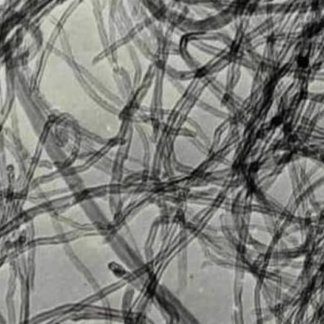
COOH Functionalized Graphitized Multi Walled Carbon Nanotubes 10-20nm
$6.00 - $35.00 / per gram Select options -
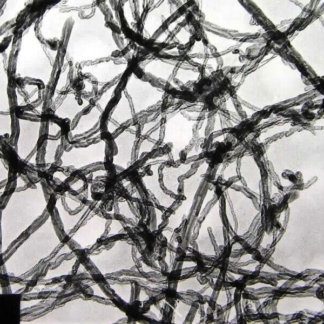
COOH Functionalized Graphitized Multi Walled Carbon Nanotubes 20-30nm
$3.50 - $30.00 / per gram Select options -
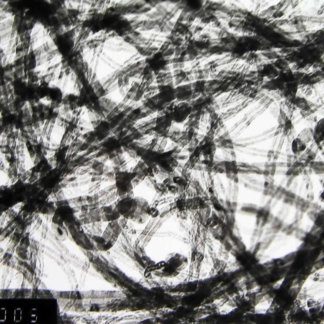
COOH Functionalized Graphitized Multi Walled Carbon Nanotubes 30-50nm
$3.49 - $25.00 / per gram Select options -
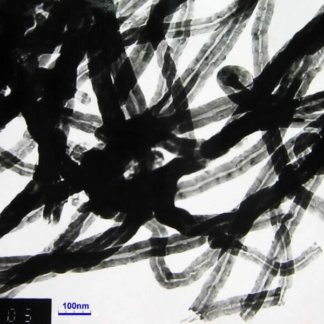
COOH Functionalized Graphitized Multi Walled Carbon Nanotubes 50nm
$2.80 - $25.00 / per gram Select options -
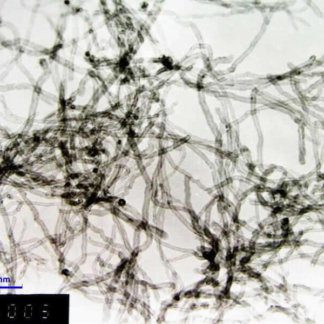
COOH Functionalized Graphitized Multi Walled Carbon Nanotubes 8-15nm
$4.49 - $45.00 / per gram Select options -
Flexiphene Aqueous Nanomaterial Emulsions
View Flexiphene Aqueous Nanomaterial Emulsions -
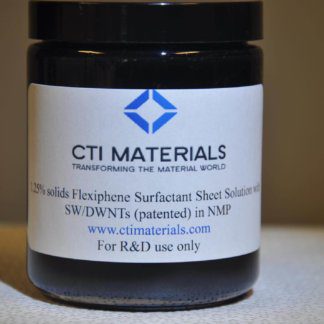
Flexiphene Solvent Based Nanomaterial Emulsions
View Flexiphene Solvent Based Nanomaterial Emulsions -
Flexiphene Surfactant Solutions
View Flexiphene Surfactant Solutions -
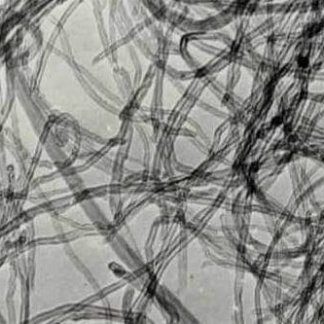
Graphitized Multi Walled Carbon Nanotubes 10-20nm
$3.65 - $50.00 / per gram Select options -
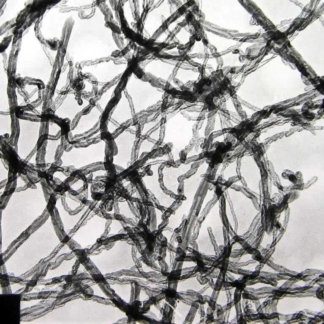
Graphitized Multi Walled Carbon Nanotubes 20-30nm
$2.99 - $40.00 / per gram Select options -
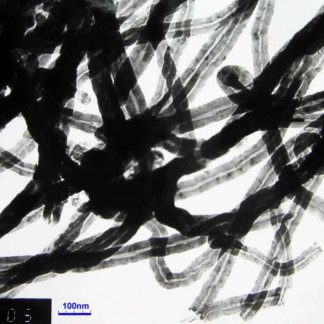
Graphitized Multi Walled Carbon Nanotubes 50nm
$3.00 - $10.00 / per gram Select options -
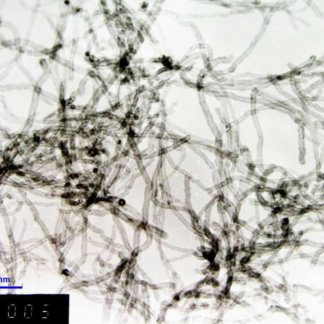
Graphitized Multi Walled Carbon Nanotubes 8-15nm
$3.65 - $50.00 / per gram Select options
What Are Graphitized Carbon Nanotubes?
Graphitized multi-walled carbon nanotubes are produced by annealing standard MWCNT powders under inert atmosphere (argon or nitrogen) at 2,400-2,800C for approximately 20 hours. This high-temperature treatment eliminates structural defects in the graphene lattice — sp3 carbon bonds, vacancies, and amorphous carbon deposits — transforming defective walls into near-perfect graphitic structure. The result is the highest crystallographic order achievable in a carbon nanotube, with electrical conductivity approaching graphite and ignition temperatures in air reaching 800C.
How Graphitization Changes MWCNT Properties
| Property | Standard MWCNTs | Graphitized MWCNTs |
|---|---|---|
| Raman D/G Ratio | 0.8-1.2 (high defect) | 0.1-0.3 (low defect) |
| Electrical Conductivity | 10^3-10^5 S/m | 10^5-10^7 S/m |
| Ignition Temperature (air) | 400-600C | 750-800C |
| Interlayer Spacing | 0.342-0.348 nm | 0.335-0.338 nm (approaching graphite) |
| Thermal Conductivity (axial) | ~1,500 W/m·K | Up to 3,000 W/m·K |
| Catalyst Residue | 1-10% | <1% (burned off during annealing) |
The key tradeoff: graphitization reduces BET surface area (defect sites close, inner pores seal) from 200-400 m2/g to 100-250 m2/g. For applications requiring maximum conductivity, oxidation resistance, or crystallographic perfection, graphitized MWCNTs are clearly superior. For applications depending on high surface area, standard MWCNTs may be preferred.
Applications of Graphitized Carbon Nanotubes
High-Conductivity Polymer Composites
Graphitized MWCNTs provide 10-100x lower percolation threshold compared to standard MWCNTs, due to higher intrinsic conductivity. At 0.5-2 wt% loading in thermoplastics or epoxy resins, graphitized MWCNTs achieve composite conductivities of 10-100 S/m — sufficient for ESD protection, EMI shielding, and through-thickness heating. This is the dominant commercial application.
Thermal Interface Materials
The near-perfect graphitic lattice gives graphitized MWCNTs axial thermal conductivities approaching 3,000 W/m·K — the theoretical maximum. In thermal interface materials (TIMs) for CPUs, power electronics, and LED assemblies, graphitized MWCNTs outperform standard MWCNTs at equivalent loading. Vertically aligned arrays are particularly effective.
High-Temperature Applications
Graphitized MWCNTs are the only CNT grade suitable for prolonged air exposure above 500C. Their oxidation onset at 750-800C — 200C higher than standard MWCNTs — makes composites viable for brake components, aerospace thermal protection, and high-temperature filtration where conventional MWCNTs would oxidize.
Electrochemical Applications
For batteries, supercapacitors, fuel cells, and electrocatalysis, graphitized MWCNTs serve as superior conductive supports. Reduced defect density minimizes parasitic redox reactions from sp3 carbon sites, improving Coulombic efficiency and cycle life in Li-ion battery cathodes over 500+ cycles.
Tribological Coatings
The near-frictionless graphitic surface makes graphitized MWCNTs exceptional solid lubricant additives. In polymer coatings and metallic lubricant formulations, graphitized CNTs reduce wear rates by 30-50% vs. standard MWCNTs. Reduced surface reactivity also improves chemical compatibility in harsh environments.
Selecting a Grade
Available in outer diameters from 8-15 nm to >50 nm, and in COOH/OH functionalized grades. Smaller diameters offer higher aspect ratio; larger diameters are easier to disperse. Cheap Tubes provides TGA and Raman data on request to confirm crystallographic quality. Pricing starts at $2.80/g. Contact us for volume pricing and lot-specific characterization data.
Showing 1–12 of 18 results