
Carbon Nanotube Masterbatches
Quick Summary: Carbon Nanotube Masterbatches
- What they are — pre-dispersed CNT/polymer pellet concentrates ready to dilute and extrude into your target polymer matrix
- Why they matter — eliminate dispersion challenges in extrusion or injection molding; consistent loading, no clumping, no inhalation hazard
- Compared to neat CNT powder — far easier to process, better dispersion uniformity, higher cost per gram of CNT but lower total processing cost
- Key applications — antistatic and conductive polymer parts, EMI shielding plastics, automotive components, electronics packaging
- Available carrier polymers — Polystyrene, Polycarbonate, Polypropylene, PA 6 (nylon), ABS — custom carriers on request
We supply Carbon Nanotube Masterbatches!
Carbon Nanotube Masterbatches are now available in
- Polystyrene
- Polypropylene
- Polycarbonate
- PA6 and
- ABS
Carbon Nanotube masterbatches are polymer pellets with multi walled carbon nanotubes dispersed in the polymer at concentrations of 10-20wt%.
The masterbatch can then be “let down” or diluted for further processing into parts made from conductive plastics and polymers.
Prices are per kilogram. To find the price for a specific product and quantity, please click thru to the individual product page and enter the quantity you need. Our website will display the price for that specific quantity.
Quotes are available online thru our cart. Simply add the products and quantities you need into the cart and then you can print or download a quote.
Showing all 5 results
-
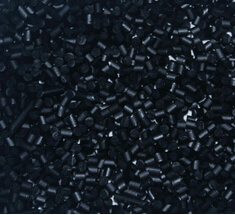
Carbon Nanotube Masterbatches CNT-ABS-10
$190.00 - $250.00 / per KG Select options -
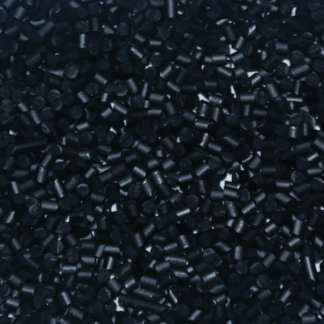
Carbon Nanotube Masterbatches CNT-PA6-15
$190.00 - $250.00 / per KG Select options -
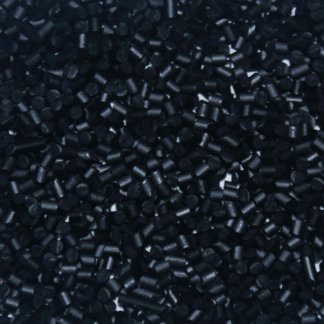
Carbon Nanotube Masterbatches CNT-PC-10
$190.00 - $250.00 / per KG Select options -
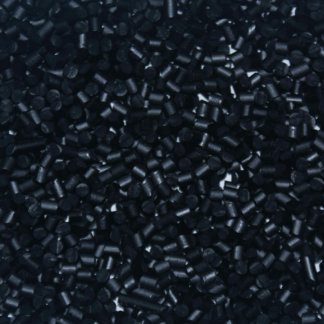
Carbon Nanotube Masterbatches CNT-PP-15
$85.00 - $95.00 / per KG Select options -
Carbon Nanotube Masterbatches CNT-PP-20
$190.00 - $250.00 / per KG Select options
What are Carbon Nanotube Masterbatches?
Carbon Nanotube Masterbatches are pre-dispersed concentrates of multi-walled carbon nanotubes in a thermoplastic carrier polymer, supplied as ready-to-extrude pellets. Each pellet contains a known weight percentage of well-dispersed CNTs in the same base polymer you intend to use in your final part — so you simply blend the masterbatch with virgin polymer to reach your target conductivity, then process on standard extrusion or injection molding equipment. The masterbatch approach eliminates the dispersion challenges, dust hazards, and lot-to-lot inconsistency that come with handling neat CNT powder in a production environment.
Why Masterbatches Beat Neat CNT Powder for Production
Loose CNT powder is notoriously difficult to disperse uniformly in thermoplastic melts. Achieving full percolation requires high shear, often custom screw geometries, and careful temperature control — and even then, agglomerates routinely survive into the final part, creating localized resistivity hot spots and weak points. Masterbatches solve this with a controlled dispersion step done once at the manufacturer:
- Consistent loading — every pellet contains the same CNT concentration, so blending is predictable to within ±10% of target
- No agglomerates — high-shear compounding with optimized screws fully exfoliates the CNT network before pelletizing
- No inhalation hazard — fiber-bound CNTs in pellet form eliminate the airborne dust risk that loose CNT powder presents in a production facility
- Standard processing — the masterbatch processes on the same extruder or injection molder as the carrier polymer, with no special equipment
- Faster development cycles — dial in the final loading by adjusting the let-down ratio rather than re-running compound trials
Available Carrier Polymers
Cheap Tubes supplies CNT masterbatches in five carrier polymers, selected to match the most common engineering and commodity thermoplastic applications:
| Carrier Polymer | Typical CNT Loading | Common Applications |
|---|---|---|
| Polystyrene (PS) | 15 to 20 wt% CNT | Antistatic packaging, EMI-shielding consumer enclosures |
| Polycarbonate (PC) | 10 to 15 wt% CNT | ESD-safe electronics housings, optical-grade conductive parts |
| Polypropylene (PP) | 15 to 20 wt% CNT | Automotive fuel-system components, conductive containers |
| Polyamide 6 (PA 6) | 10 to 15 wt% CNT | Antistatic gears, electrical connectors, structural parts |
| ABS | 10 to 15 wt% CNT | EMI shielding for electronics, conductive automotive trim |
Custom carrier polymers (TPU, PEEK, POM, and bio-polymers) and custom loading levels are available on request for project work and pilot scale-up.
Typical Use — Calculating the Let-Down Ratio
To reach a target CNT loading in the final part, calculate the let-down ratio as: (final wt% target) ÷ (masterbatch wt%) = mass fraction of masterbatch in the blend. For example, to reach 1.5 wt% CNT in a final PP part using a 15 wt% CNT masterbatch, blend the masterbatch at 10% with 90% virgin PP. Most antistatic applications need 0.5 to 2 wt% final CNT loading; EMI shielding typically needs 3 to 7 wt%; structural reinforcement applications target 1 to 3 wt%.
Applications Where Masterbatches Make Sense
- Antistatic and ESD-safe plastics — packaging, IC trays, electronics enclosures, semiconductor handling
- EMI shielding plastics — consumer electronics housings, medical device enclosures, automotive sensor housings
- Conductive automotive components — fuel system parts, fuel tank liners, conductive trim, anti-static body panels
- Industrial conveyor and tooling parts — conductive bearings, bushings, and wear surfaces in dust-sensitive environments
- Conductive films and sheets — extruded films for shielding bags and conductive flooring
Documentation and Ordering
Every masterbatch order ships with a Technical Data Sheet listing the carrier polymer grade, CNT type and outer diameter, target CNT weight percentage, recommended processing conditions (melt temperature, screw configuration, residence time), and recommended let-down ratios for typical end-application loadings. A current Safety Data Sheet is included. Certificate of Analysis is available on request and includes the as-measured CNT loading, dispersion uniformity (verified by SEM), and Raman spectrum of the compounded pellets.
Standard pricing covers 1 kg to 25 kg orders for development work. Production-quantity pricing (>100 kg) is quoted on request — we ship from Vermont and most stock orders go out within 5 business days. Custom carrier polymer formulations and custom CNT loadings are quoted with a 2 to 4 week development lead time.
Frequently Asked Questions
What loading should I use to make an antistatic part?
Antistatic performance (10^9 to 10^11 ohm-cm surface resistivity) typically requires 0.5 to 1.5 wt% CNT in the final part. Using a 15 wt% CNT masterbatch, that translates to a 3 to 10 percent let-down ratio with virgin polymer. Test sheets at the upper and lower bounds first because percolation is sensitive to your specific processing conditions.
How do I know if my extruder will properly process the masterbatch?
Standard single-screw extruders work for most carrier polymers at typical let-down ratios. For higher final loadings (above 5 wt% CNT) or carriers with high melt viscosity (PA 6, PC), a twin-screw extruder gives more uniform dispersion. We provide recommended barrel-temperature profiles and screw RPM ranges with each masterbatch order; these are starting points and may need tuning for your specific machine.
Can I blend two different masterbatches in the same part?
Yes, as long as the two carrier polymers are miscible or compatibilized. Blending a CNT-PP masterbatch with a CNT-PA 6 masterbatch in the same part will need a compatibilizer. Blending two carriers in the same family (e.g., PS with HIPS) generally works without modification. Contact us if you are designing a multi-additive blend; we can recommend the best masterbatch combination.
How long do masterbatch pellets stay good in storage?
In sealed bags at room temperature and low humidity, CNT masterbatches are stable for at least 24 months. The carrier polymer can absorb moisture (especially PA 6 and PC) so re-dry the pellets at the carrier polymer’s recommended temperature for 4 to 6 hours before processing if the bag has been opened or stored in humid conditions.
Are there bio-based or recycled-content carrier options?
Yes, on request. We have processed CNTs into PLA, recycled PET, and recycled PP for sustainability-focused customers. Lead times are 3 to 4 weeks for development quantities. Contact us with your sustainability target and end-application specs.
What documentation comes with each order?
Every order ships with a batch-specific Technical Data Sheet covering carrier polymer grade, CNT type and OD range, target wt% loading, processing recommendations, and let-down ratios for typical end applications. A current Safety Data Sheet is included. Certificate of Analysis with SEM dispersion images and Raman is available on request for research and qualification work.
Showing all 5 results