Description
Single Layer Graphene Oxide
We supply Single Layer Graphene Oxide (SLGO) by the milligram, gram, or KG in powder form, dispersed, or as a coating on substrates.
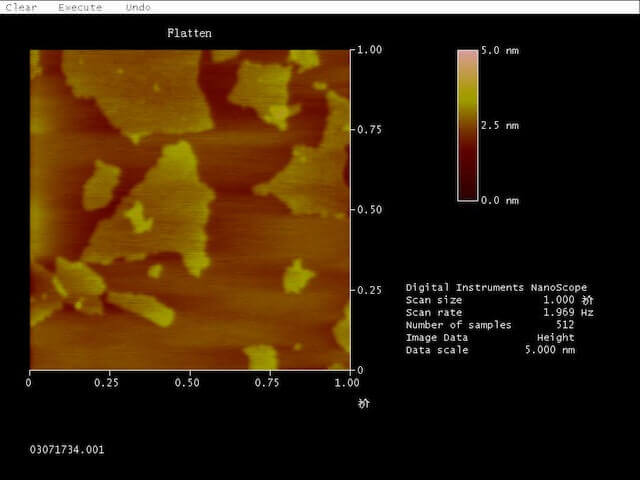
Single layer graphene oxide is relatively hard to produce. Research into effective yet inexpensive ways to make derivatives or related materials has attracted tremendous interest. Single layer graphene oxide is a single-atomic layer of highly oxidized carbon atoms, made by chemical oxidation of graphite. A material which is inexpensive and abundant. Graphene oxide is an oxidized form of graphene, laced with oxygen-containing groups. It is considered easy to process because it’s functionality promotes dispersion in water and other solvents and it can even be used to make graphene. Graphene oxide is an electrical insulator, not a good conductor, but a reduction process can restore the graphene structure and conductivity. Graphene oxide layers are about 1.1 ± 0.2 nm thick.
Graphene oxide is synthesized using four basic methods: Staudenmaier, Hofmann, Brodie and Hummers and many variations of these methods exist. The effectiveness of an oxidation process is often evaluated by the carbon/oxygen ratios of the graphene oxide.
We can provide graphene oxide dispersions In Di Water, NMP, THF, or DMF. Hazmat shipping fees may apply. The standard concentration for dispersions is 2mgs/ml, up to 10mgs/ml is available.
Single Layer Graphene Oxide Specifications
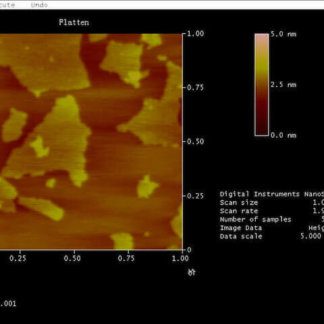
Size: 300-800nm lateral dimensions
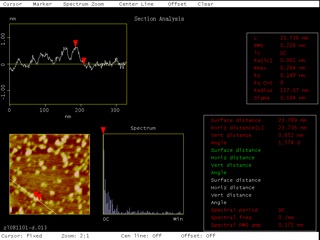
Thickness: 0.7-1.2 nm by AFM
Solubility: DI Water, NMP, DCB, THF, DMF, and other solvents that behave like water
Purity: 99wt%
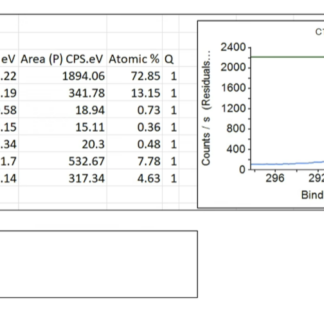
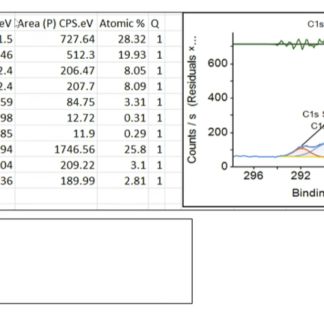
Elemental Analysis: C: 35-42%, O: 45-55%, H: 3-5%
Cited in research: Used by the Politecnico di Torino DISAT group as the graphene oxide precursor for sulfur and nitrogen co-doped rGO/ZnS cathodes in lithium-sulfur batteries — 648 mAh/g at 1C, 48.2% capacity retention at 750 cycles. Read the Li-S Spotlight — Colombo et al., Nanomaterials 13(15), 2149 (2023).
Cited in research: Used by the Lamberti group (Politecnico di Torino DISAT) as the active material for BOTH capacitive deionization desalination (17 mg/g salt removal, 98% charge efficiency) AND CapMix salinity-gradient energy harvesting (12 mW/m² net power output). Same Cheap Tubes GO, two opposite directions of water electrochemistry. Read the Dual-Anchor Spotlight — Pedico et al., Adv. Mater. Technol. 7(8), 2101513 (2022) + Adv. Sustain. Sys. 8(10), 2400106 (2024).
Cited in research: Cheap Tubes Single Layer Graphene Oxide referenced in Freyman et al. (Lawrence Livermore + UC Santa Cruz, Energy Advances 5, 448 (2026)) as the GO precursor comparison material in a 3D-printed aerogel supercapacitor scaffold study. The companion paper cites THIS product page directly in its bibliography (reference 14). Read the 3D-Print Supercap Spotlight.
Cited in research: Used by the Chen lab at Virginia Tech and UC Riverside as the ssDNA fluorescent-probe quencher in a graphene-oxide CRISPR-Cas12a biosensor — 3 × 10³ CFU/mL detection of Salmonella Typhimurium in human serum, under 1 hour, point-of-care sepsis diagnostic architecture. Read the GO-CRISPR Sepsis Detection Spotlight — Kasputis, He, Ci, Chen, Anal. Chem. (2024).
Cited in research: Used by the Vander Wal group at the Penn State EMS Energy Institute as the catalytic template (45-55 atomic% oxygen) for converting sugar (sucrose), a textbook non-graphitizing precursor, into graphitic carbon — opening a biomass-derived sustainable route to battery-grade graphite. Read the Sugar-to-Graphite Spotlight — Singh and Vander Wal, C – J. Carbon Res. 8, 15 (2022).
Cited in research: Used by the Coppin State Center for Nanotechnology team (with UCF, Cranfield, Oglethorpe, and King Abdulaziz collaborators) as the GO precursor for in-house chemical reduction to rGO, incorporated into a TiO2/rGO amalgam photoanode for a dye-sensitized solar cell — +25% relative PCE lift (2.02% vs 1.61% control) at matched architecture. Read the DSSC Solar Spotlight — Ghann, Kang, Uddin et al., ChemEngineering 3, 7 (2019).