
Nano Inks
Nano Inks
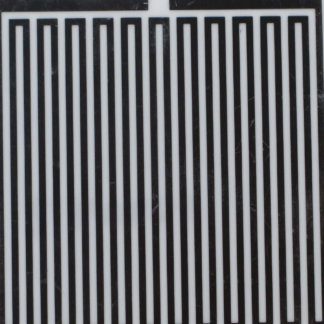
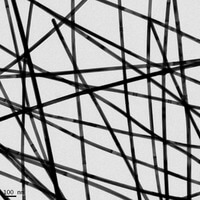
Nano inks are available. Graphene ink can be used for electrodes and sensor applications. Silver nanowire ink is a current development project and we hope to bring it to market in Q4 of 2018.
Please contact us to discuss your needs.
Showing all 2 results
What Are Carbon Nanotube and Graphene Nano Inks?
Nano inks are conductive or functional fluids formulated with nanomaterials — primarily graphene, carbon nanotubes, or silver nanowires — dispersed in a carrier solvent or binder system. Unlike conventional conductive inks based on silver flake or carbon black, nano inks leverage the exceptional electrical, thermal, and mechanical properties of their nanoscale components to deliver conductivity, flexibility, and printability that conventional materials cannot match.
Cheap Tubes supplies graphene ink for printed electrodes, sensors, and conductive coatings, as well as silver nanowire ink for transparent electrode applications in touch screens, OPV, and flexible electronics. Both ink types are formulated for compatibility with screen printing, gravure, flexographic, and inkjet deposition methods.
Graphene Ink
Graphene ink consists of graphene nanoplatelets or reduced graphene oxide dispersed in a polymer binder and solvent system. After printing and drying, the overlapping graphene flakes form a percolating conductive network. Key advantages over conventional carbon inks include lower sheet resistance (10-100 Ohm/sq vs 100-1000 Ohm/sq for carbon black ink), excellent flexibility, superior thermal stability to 400C, and excellent printability across screen, gravure, and inkjet methods.
Silver Nanowire Ink
Silver nanowire (AgNW) ink is the leading solution for transparent conductive electrodes (TCEs) that require both high conductivity and optical transparency. At loadings that achieve sheet resistance below 10 Ohm/sq, AgNW films maintain optical transmittance above 85% — performance that rivals ITO at a fraction of the cost and with far superior flexibility. Unlike ITO, silver nanowire electrodes do not crack under bending, making them essential for rollable displays and conformable biosensors.
Cheap Tubes synthesizes 30 nm outer diameter silver nanowires in-house at our Vermont facility, giving us direct quality control over aspect ratio, concentration, and lot-to-lot consistency — shipped at 25 mg/mL in isopropanol (IPA).
Applications of Nano Inks
Printed Electronics and Sensors
Graphene and CNT inks enable screen-printed electrochemical sensors for glucose, heavy metals, DNA, and gas detection directly onto flexible substrates. These are used in disposable point-of-care diagnostic strips, environmental monitoring patches, and wearable biosensors. The high surface area and electrochemical activity of graphene provide detection limits in the nanomolar range — superior to conventional carbon paste electrodes.
Transparent Conductive Electrodes
Silver nanowire inks deposited by spray coating, bar coating, or slot-die coating form percolating networks with sheet resistance below 10 Ohm/sq at transmittance above 85%. These TCEs replace brittle ITO in flexible OPV, OLED, and touch panel applications. AgNW junctions can be fused by UV, thermal, or chemical treatment to reduce contact resistance by 2-5x and improve long-term stability.
EMI Shielding Films
Graphene and CNT nano inks applied as coatings or printed patterns on polymer films provide EMI shielding effectiveness of 20-40 dB across the GHz frequency range at 1-5 wt% loading — replacing metallic shielding with lightweight, flexible, and corrosion-resistant alternatives for consumer electronics, automotive electronics, and aerospace.
Energy Storage Electrodes
Printed graphene current collectors in flexible supercapacitors achieve specific capacitances of 100-300 F/g. CNT-based inks are used for printed anodes and cathodes in lithium-ion microbatteries for IoT devices and smart packaging, where thin-film form factors are required.
RF and Antenna Applications
Nano inks enable printing of RFID antennas, NFC coils, and mmWave patch antennas on flexible and conformal substrates. Graphene inks are particularly effective for high-frequency applications due to low skin depth losses and compatibility with non-flat surfaces.
Selecting the Right Nano Ink
Graphene ink is preferred for opaque electrode applications requiring high flexibility, chemical resistance, and moderate conductivity. Silver nanowire ink is the choice when optical transparency is required alongside low sheet resistance. Contact Cheap Tubes to discuss your application — we supply both ink types and can accommodate custom concentrations and solvent systems. Request a quote or view our SDS documents.
Showing all 2 results