
Graphene Nanoplatelets
- What they are — Stacks of 5–15 parallel graphene sheets; 1–25 µm lateral size, 1–15 nm thick
- Key advantage — Near-graphene electrical and thermal performance at a fraction of the cost
- Three grades — H-grade (1–5 layers, ~750 m²/g), M-grade (5–10 layers), L-grade (10–15 layers)
- Top uses — Conductive composites, EMI shielding, thermal management, battery electrodes, gas barriers
- Loading levels — Typically 1–5 wt% for electrical percolation; 0.5–3 wt% for thermal improvements
Graphene Nanoplatelets
You need graphene-level conductivity in your composite without graphene-level cost. You need a gas barrier coating that scales to production volumes. You need electrode material with high surface area and consistent lot quality. Graphene nanoplatelets are where graphene’s properties become commercially viable.
Cheap Tubes has supplied H-grade (high surface area), M-grade, and L-grade graphene nanoplatelets to research and industrial customers since 2005, backed by representative characterization data for each grade. Functionalized grades (COOH, OH, NH₂, F) available for polar matrix compatibility. If our material doesn’t meet published specifications, we’ll replace it or refund your order. US stock, ships from Vermont.
From $50/g for standard grades. Industrial volumes available. Contact us for volume pricing, custom particle size specifications, or application support.
Frequently Asked Questions About Graphene Nanoplatelets
What are graphene nanoplatelets?
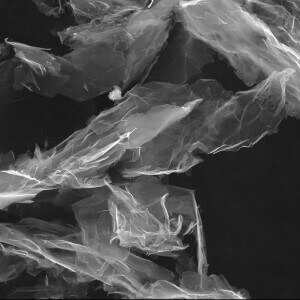
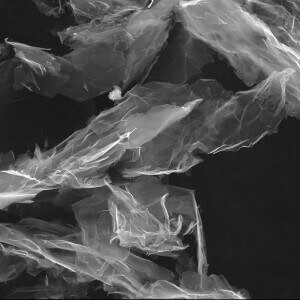
Graphene nanoplatelets (GNPs) are thin stacks of parallel graphene sheets with lateral dimensions of 1–25 micrometers and a thickness of 1–15 nanometers (typically 5–15 graphene layers). They bridge the gap between single-layer graphene and graphite, offering graphene-like electrical and thermal properties at significantly lower cost and with easier processing than pristine graphene.
What is the difference between graphene nanoplatelets and pure graphene?
Pure (single-layer) graphene has the highest theoretical performance — one atom thick, with ~5,000 W/m·K thermal conductivity and ~10⁸ S/m electrical conductivity — but is extremely difficult and expensive to produce at scale. Graphene nanoplatelets (5–15 layers) sacrifice a fraction of this performance but are far less costly, much easier to disperse in polymers and solvents, and readily available in kilogram quantities. For most composite and coating applications, GNPs deliver 80–90% of the performance benefit at 10–20% of the cost.
What grades of graphene nanoplatelets are available?
Graphene nanoplatelets are typically offered in three grades based on layer count and surface area: H-grade (1–5 layers, ~750 m²/g surface area) for high-performance battery electrodes and supercapacitors; M-grade (5–10 layers, 300–500 m²/g) for conductive polymer composites and EMI shielding; and L-grade (10–15 layers, 100–300 m²/g) for mechanical reinforcement and gas barrier coatings. Functionalized variants (amine, carboxyl, hydroxyl) are also available for improved dispersion.
What loading level of graphene nanoplatelets is needed for electrical conductivity?
Electrical percolation in polymer composites typically occurs at 1–5 wt% GNP loading, depending on the polymer matrix, GNP aspect ratio, and mixing method. High-aspect-ratio, well-exfoliated GNPs achieve percolation at lower loadings (1–2 wt%) because fewer platelets are needed to form a continuous conductive network. For thermal conductivity improvements, loadings of 0.5–3 wt% are common, though thermal percolation thresholds are generally higher than electrical ones.
How do I disperse graphene nanoplatelets in a polymer or solvent?
Dispersion quality is the most critical factor in GNP composite performance. Common methods include: (1) Sonication in NMP, DMF, or water with a surfactant for liquid-phase dispersion; (2) High-shear mixing or three-roll milling for polymer melts and epoxies; (3) Ball milling for dry blending before melt compounding. Functionalized GNPs (amine- or hydroxyl-functionalized) disperse more readily in polar solvents and reactive resin systems without additional surfactants.
Showing 1–12 of 13 results
-
COOH Functionalized Graphene Nanoplatelets
$3.75 - $40.00 / per gram Select options -
F Functionalized Graphene Nanoplatelets
$0.75 - $30.00 / per gram Select options -
Flexiphene Aqueous Nanomaterial Emulsions
Read more -
Flexiphene Solvent Based Nanomaterial Emulsions
Read more -
Flexiphene Surfactant Solutions
Read more -
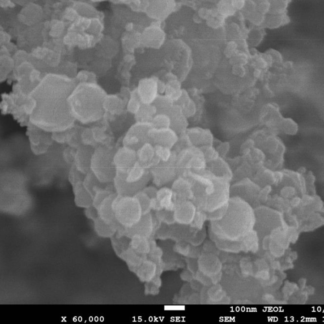
Graphene Nanoparticles Conductive Additive
$200.00 Kilogram Select options -
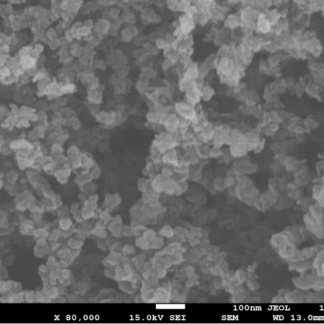
Graphene Nanoparticles Lubricant Additive
$200.00 Add to cart -
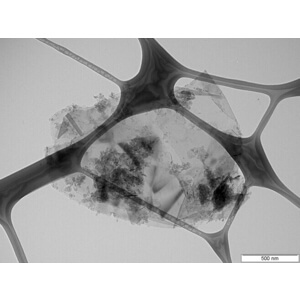
Graphene Nanoplatelets
$0.45 - $15.00 / per gram Select options -
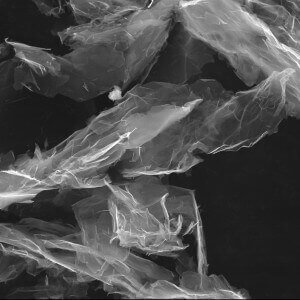
Graphene Nanoplatelets Non Functionalized
$1.50 - $25.00 / per gram Select options -
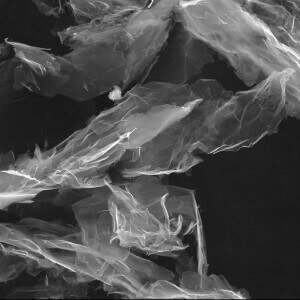
N2 Functionalized Graphene Nanoplatelets
$0.75 - $30.00 / per gram Select options -
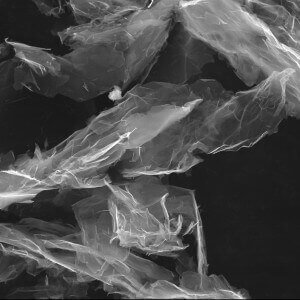
NH2 Functionalized Graphene Nanoplatelets
$3.75 - $40.00 / per gram Select options -
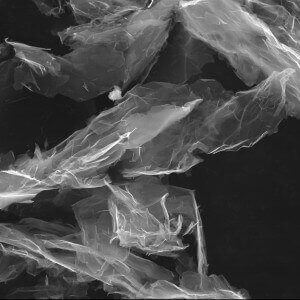
O+ Functionalized Graphene Nanoplatelets
$0.75 - $30.00 / per gram Select options
What Are Graphene Nanoplatelets?
Graphene nanoplatelets (GNPs) are stacks of parallel graphene sheets — thin platelets of multilayer graphene with lateral dimensions from 1 to 25 μm and thickness from 1 to 15 nm (typically 5–15 graphene layers). They occupy the structural space between single-layer graphene and graphite: too thin to be considered graphite, but not the single-atom thickness of true graphene. This intermediate structure gives GNPs a practical advantage: they are far easier to produce in large quantities and disperse in matrices than single-layer graphene, while delivering most of graphene’s conductivity, thermal, and barrier properties.
Cheap Tubes supplies GNPs in three grades — H (high surface area, thin, 1–5 layers), M (medium, 5–10 layers), and L (large platelet, 10–15 layers) — to match different application requirements. Functionalized grades (COOH, OH, NH₂, F) are available for improved compatibility with polar matrices.
Graphene Nanoplatelet Properties
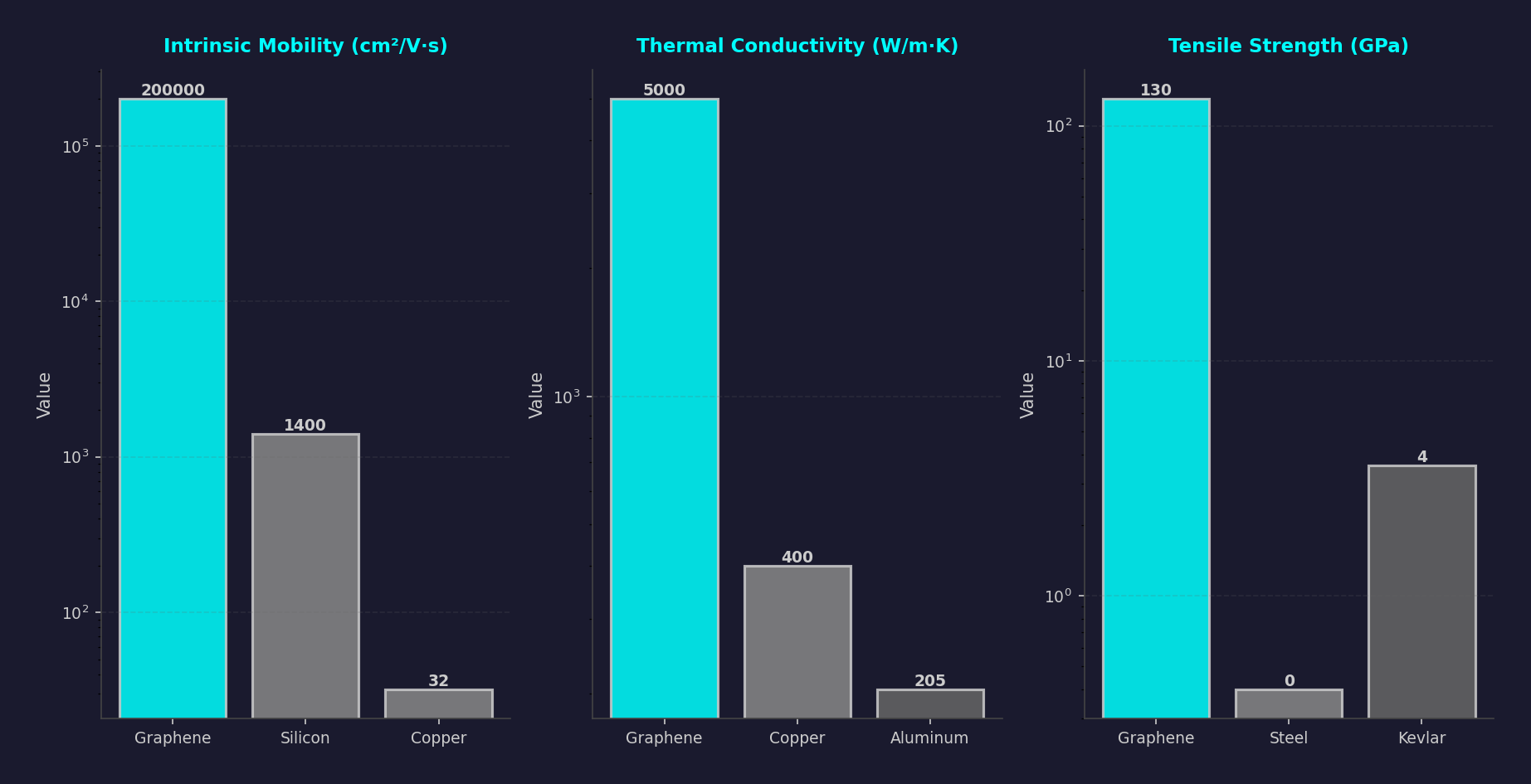
| Property | Graphene (ideal) | GNP (typical bulk) |
|---|---|---|
| Intrinsic carrier mobility | ~200,000 cm²/V·s | 1,000–10,000 cm²/V·s |
| Thermal conductivity (in-plane) | ~5,000 W/m·K | 3,000–5,000 W/m·K |
| Young’s modulus | ~1,000 GPa | 500–1,000 GPa |
| Tensile strength | ~130 GPa | Dependent on layers/defects |
| Specific surface area | 2,630 m²/g (theoretical) | 400–750 m²/g (H-grade) |
| Electrical conductivity | ~10⁶ S/m | 10²–10⁵ S/m (film) |
| Barrier factor | Impermeable to gases | Excellent gas/moisture barrier |
In practical composites and coatings, GNPs deliver significant property improvements even at low loading levels (0.5–5 wt%) because their high aspect ratio (lateral dimension >> thickness) creates efficient percolating networks for electrical and thermal conduction, and large-area platelets act as highly tortuous barriers to gas and moisture transmission.
Graphene Nanoplatelet Grades
The three standard grades differ primarily in platelet thickness and resulting surface area. H-grade (1–5 layers, ~750 m²/g BET surface area) is preferred for applications where maximum surface area matters: battery electrodes, supercapacitor electrodes, and catalyst supports. M-grade (5–10 layers, ~300–500 m²/g) offers a balance of conductivity and dispersibility for conductive composites, inks, and coatings. L-grade (10–15 layers, ~100–300 m²/g) has the largest lateral platelet dimensions, providing maximum barrier properties and mechanical reinforcement in polymer composites, particularly for gas barrier films and structural applications.
Applications of Graphene Nanoplatelets
Conductive Polymer Composites
At 2–5 wt% in engineering thermoplastics (ABS, PA6, polycarbonate, HDPE), GNPs improve electrical conductivity by 10–12 orders of magnitude — from insulating to ESD-safe or conductivity suitable for EMI shielding. GNP-filled composites achieve surface resistivities of 10⁴–10⁸ Ω/sq depending on loading and grade. The high aspect ratio of GNPs produces better electrical percolation at lower loading than carbon black, preserving mechanical properties and surface finish.
Thermal Management
GNP-reinforced thermal interface materials (TIMs) and polymer compounds show significant improvement in through-plane thermal conductivity at 5–20 wt% loading. In-plane conductivity gains are even higher due to GNP preferential orientation in processing. GNPs are used in thermally conductive compounds for LED heat sinks, power electronics encapsulants, and thermally conductive structural plastics where heat dissipation is critical.
Gas and Moisture Barrier Coatings
GNPs are impermeable to gases and moisture at the single-platelet level. In polymer coatings and films, oriented GNP platelets create a tortuous diffusion path that dramatically reduces gas transmission rates. At 2–5 wt% in epoxy or polyurethane coatings, GNPs improve oxygen and water vapor barrier by 3–10×. Applications include food packaging films, corrosion-resistant coatings, and fuel tank liners.
Battery and Supercapacitor Electrodes
H-grade GNPs serve as high-surface-area active materials or conductive additives in Li-ion battery anodes and supercapacitor electrodes. Their theoretical capacity combined with higher surface area and better electrolyte access improves rate capability. GNPs are also mixed with carbon black or CNTs to form hybrid conductive networks that outperform either component alone at equivalent loading.
Lubricant Additive
GNPs suspended in base oils reduce friction coefficients and wear rates in tribological applications. The layered graphitic structure allows inter-platelet sliding, providing lubrication even under high contact pressure. At 0.1–1 wt% in industrial lubricants, GNPs improve anti-wear performance by 30–50% compared to unfilled base oils.
Conductive Inks and Coatings
GNPs dispersed in appropriate solvents (NMP, ethanol, water with surfactant) can be formulated into screen-printable or gravure-printable conductive inks. Printed GNP films achieve sheet resistances of 1–100 Ω/sq depending on film thickness and annealing. Applications include printed resistive heaters, strain sensors, and flexible conductive traces for wearable electronics.
Dispersion of GNPs
GNPs tend to restack due to van der Waals interactions between graphene layers. Effective dispersion requires mechanical energy (sonication or high-shear mixing) and chemical compatibility between the platelet surface and the matrix. For aqueous systems, surfactants or functionalized grades (COOH, NH₂) improve colloidal stability. For polymer melt compounding, surface modification improves interfacial adhesion and prevents re-agglomeration during processing. High-aspect-ratio H-grade GNPs are most sensitive to dispersion quality — inadequate dispersion wastes their surface area advantage.
GNP Pricing and Ordering
Graphene nanoplatelet pricing ranges from $0.45–$40/g for standard grades, and from $0.75–$40/g for functionalized grades, depending on grade and quantity. Industrial volumes (kg scale) are available at significantly lower per-gram pricing. Contact us for volume pricing, custom particle size specifications, and application support. SDS documentation available on our SDS page.
Showing 1–12 of 13 results