
Single Walled Carbon Nanotubes
Single-Walled Carbon Nanotubes (SWCNTs)
You’re working at the frontier — where electrical conductivity, optical absorption, and mechanical strength all matter simultaneously. Your experiment demands SWCNTs that are actually what they claim to be: high purity, consistent chirality distribution, properly characterized.
Cheap Tubes has supplied SWCNTs to researchers publishing in Nature, Science, and ACS Nano since 2005. We carry CVD SWCNTs, arc discharge SWCNTs, and our patented Flexiphene SW/DWNTs — all with full SDS documentation and technical support from people who understand your application.
Prices from $75/g. Add to cart for an instant quote, or contact us for bulk pricing and custom specifications.
Showing 1–12 of 19 results
-
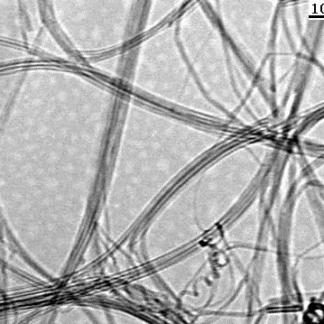
COOH Functionalized Single Walled-Double Walled Carbon Nanotubes
$77.80 - $125.00 / per gram Select options -
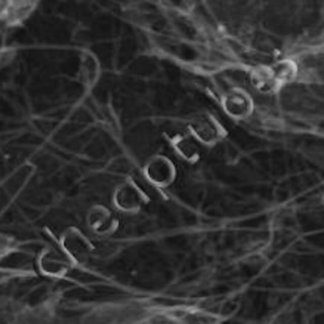
COOH Functionalized Single Walled-Double Walled Carbon Nanotubes 99
$156.25 - $300.00 / per gram Select options -
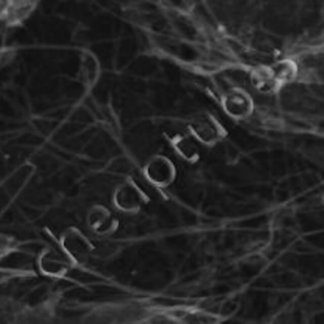
F Functionalized Single Walled-Double Walled Carbon Nanotubes
$156.25 - $300.00 / per gram Select options -
Flexiphene Aqueous Nanomaterial Emulsions
Read more -
Flexiphene Solvent Based Nanomaterial Emulsions
Read more -
Flexiphene Surfactant Solutions
Read more -
N2 Functionalized Single Walled-Double Walled Carbon Nanotubes 99
$156.25 - $300.00 / per gram Select options -
NH2 Functionalized Single Wall-Double Walled Carbon Nanotubes
$156.25 - $300.00 / per gram Select options -
O Functionalized Single Walled-Double Walled Carbon Nanotubes 99
$156.25 - $300.00 / per gram Select options -
OH Functionalized Single Walled-Double Walled Carbon Nanotubes
$78.00 - $130.00 / per gram Select options -
Short COOH Functionalized Single Walled-Double Walled Carbon Nanotubes 1-4nm
$102.00 - $190.00 / per gram Select options -
Short OH Functionalized Single Walled-Double Walled Carbon Nanotubes 1-4nm
$102.00 - $190.00 / per gram Select options
Single-Walled Carbon Nanotube Properties
The properties that have attracted so much research interest in SWCNTs are their unique combination of electronic, optical, thermal, and mechanical characteristics — all arising from a single layer of carbon atoms held together in a tubular structure by sp² hybridized chemical bonds. Depending on the chiral angle of how the tube is rolled, individual SWCNTs are either semiconducting or metallic in nature, making them the only material where electrical properties can be tuned at the synthesis stage by controlling geometry.
Physical Structure
True SWCNTs have outer diameters of 0.7–2 nm and lengths from 0.5 to 30 μm (longer arrays up to 500 μm are available). They consist of a single hexagonal carbon lattice rolled into a seamless cylinder, with 5-membered and 6-membered rings at the end caps. Their extreme aspect ratio — diameter in the nanometer range, length in the micrometer range — gives rise to quantum mechanical effects not seen in bulk materials.
Types of SWCNTs: Chirality and Electronic Properties
SWCNTs come in three structural types defined by the chiral vector (n,m) describing how the graphene sheet is rolled. The chiral angle determines whether the nanotube is metallic or semiconducting.
| SWCNT Type | Chiral Vector Condition | Electrical Character | Example |
|---|---|---|---|
| Armchair | n = m | Always metallic | (5,5), (10,10) |
| Zigzag | m = 0 | Metallic if n divisible by 3; else semiconducting | (9,0), (10,0) |
| Chiral | n ≠ m, m ≠ 0 | Metallic if n−m divisible by 3; else semiconducting | (6,4), (8,3) |
About one-third of SWCNTs in a typical synthesis are metallic; two-thirds are semiconducting. The band gap of semiconducting SWCNTs varies from near-zero to ~2 eV and is inversely proportional to diameter. Density gradient centrifugation can be used to sort SWCNTs by electronic type, enabling enriched metallic or semiconducting fractions for specific applications.
Electronic Properties
SWCNTs are ballistic conductors along the tube axis, meaning electrons travel without scattering over tube lengths of several microns at room temperature. Their electrical conductance is quantized — metallic SWCNTs carry current in discrete conductance channels. Individual metallic SWCNTs can carry current densities exceeding 10⁹ A/cm², roughly 1,000 times the current density limit of copper, without electromigration failure. This makes them attractive for nanoscale interconnects, transparent electrodes, and field-emission devices.
Optical Properties
SWCNTs exhibit diameter-dependent optical absorption and photoluminescence in the near-infrared. Each (n,m) species has characteristic absorption peaks corresponding to van Hove singularities in its electronic density of states — making optical spectroscopy a practical characterization tool for SWCNT diameter distribution and purity. SWCNTs have been loaded at 0.03 wt% to produce transparent conductive films for solar cells and displays, replacing ITO (indium tin oxide). Their tunable near-IR fluorescence is being explored for biological imaging.
Thermal Properties
An individual SWCNT has room-temperature thermal conductivity of approximately 3,500 W·m⁻¹·K⁻¹ along its axis — about 9× that of copper (385 W·m⁻¹·K⁻¹). This ballistic thermal conductivity arises from phonon transport along the sp² carbon backbone with minimal scattering. Thermal conductivity across the tube axis (radial direction) is approximately 1.5 W·m⁻¹·K⁻¹ — far lower — making SWCNTs inherently anisotropic thermal conductors. Structural defects and tube-tube junctions in networks substantially reduce the bulk composite conductivity.
Mechanical Properties
SWCNTs are among the strongest and stiffest structures ever measured. Their covalent sp² bonds give them reported Young’s moduli from 320 to 1,470 GPa (average ~1,000 GPa) and breaking strengths of 13–52 GPa (average ~30 GPa). For comparison, steel has a Young’s modulus of 210 GPa. This combination of extreme stiffness and low density (~1.3 g/cm³ vs. ~7.9 g/cm³ for steel) means SWCNTs are stronger per unit weight than any conventional structural material. They are also mechanically resilient — when bent, they buckle elastically rather than fracturing, and straighten back without damage.
Difference Between Single-Walled and Multi-Walled Carbon Nanotubes
A SWCNT has a single graphene wall and properties that are highly sensitive to the (n,m) chirality. Our CVD SWCNTs contain approximately 50% double-walled nanotubes (DWNTs), which is typical for CCVD synthesis — we therefore describe these as “SW/DWNT” material. True single-walled product (>90% SWCNT) is produced by Arc and HiPco methods and is available at higher cost. Multi-walled carbon nanotubes are multiple concentric cylinders of graphene, each with potentially different chiral structure, producing averaged-out properties that are less chirality-dependent but still exceptional.
Raman Spectroscopy of SWCNTs
Raman spectroscopy is the primary tool for confirming SWCNT content in a sample. Three features are diagnostic: the Radial Breathing Mode (RBM) — peaks below 300 cm⁻¹ that are unique to SWCNTs and whose frequency is inversely proportional to tube diameter; the G band (~1590 cm⁻¹) confirming sp² graphitic carbon; and the D band (~1350 cm⁻¹) which indicates defect density. The G/D ratio is used as a quality metric — higher G/D means fewer defects. SWCNTs also show a sharp 2D (G’) peak at ~2680 cm⁻¹. Cheap Tubes provides Raman data on request for SWCNT lots.
Dispersion of SWCNTs
Van der Waals forces between SWCNT sidewalls cause them to bundle into ropes of 10–100 tubes, which must be debundled for most applications. Effective dispersion requires both mechanical energy (to separate bundles) and a stabilizing agent (to prevent re-agglomeration). Typical methods use an ultrasonic probe at low amplitude (27% of max power, pulsed 30 seconds on/off to prevent tube damage) in solvents such as NMP, DMF, or DI water. Surfactants commonly used include SDS, SDBS, and Triton X-100; our Flexiphene surfactant sheets achieve colloidal stability at −70 mV zeta potential in DI water 9 days after dispersion without small-molecule surfactant contamination.
Synthesis Methods
SWCNTs are synthesized by arc discharge, laser ablation, HiPco, and chemical vapor deposition (CVD). Arc and laser methods produce high-quality predominantly single-walled product but are expensive and difficult to scale. HiPco produces small-diameter SWCNTs (0.7–1.2 nm) with a broad diameter distribution. CVD is the most scalable and cost-effective method, producing longer tubes (1–10 μm) but always with ~50% DWNT content. For applications requiring true single-walled material, arc or HiPco product is preferred despite the higher cost.
SWCNT Applications
Key application areas include: transparent conductive electrodes (replacing ITO in flexible displays, OPV, touch panels at 0.03–0.1 wt% loading); energy storage (anode materials, supercapacitor electrodes, conductive binder in Li-ion cathodes); field-effect transistors and sensors (individual tube devices for chemical sensing); thermal interface materials; structural composites; and biomedical applications (drug delivery, biological imaging using near-IR fluorescence).
SWCNT Pricing
Single-walled carbon nanotube pricing ranges from $75–$300/g depending on purity, synthesis method, length, and surface functionalization. CVD SW/DWNTs are at the lower end; arc-discharge high-purity SWCNTs and functionalized grades are at the higher end. Contact us for bulk pricing and custom specifications. SDS documentation is available from our SDS page.
Showing 1–12 of 19 results