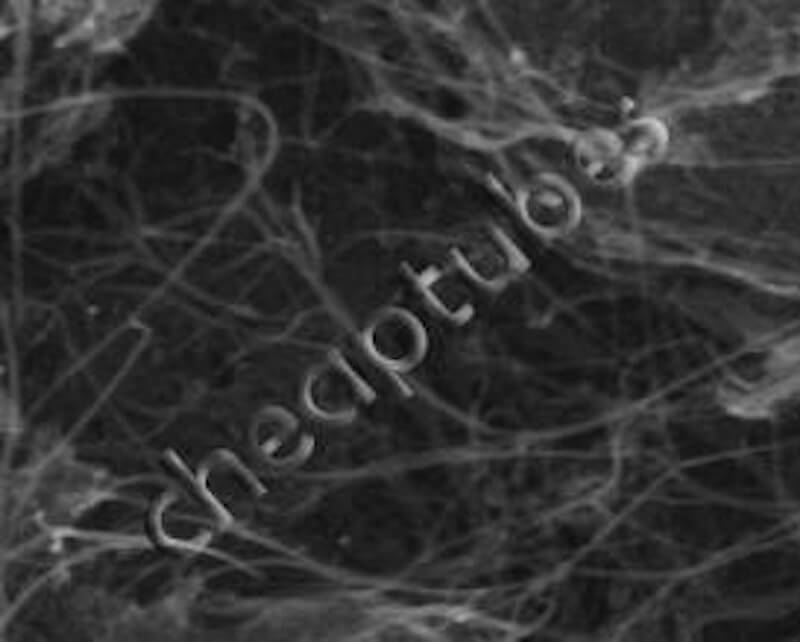
Description
NOW UPGRADED: Ultra-Long, 99.5% Purity SWCNT
This product is now supplied at a substantially improved specification. The new material is pure single-walled (1-2 nm outer diameter), 99.5% ± 0.5% purity, with ≥100 μm tube length — an order of magnitude longer than the prior 5-30 μm supply. Specific surface area 800-1,400 m²/g (near the theoretical SWCNT maximum), with low metal-catalyst residue and a six-year shelf life. See the launch Spotlight for the full context, including head-to-head comparison against ultra-long CNT specialty suppliers and OcSiAl TUBALL.
Current Product Specifications
| Property | Specification | Method |
|---|---|---|
| Tube type | Single-walled (pure SWCNT) | SEM / TEM |
| Purity | 99.5% ± 0.5% | Combined SEM-TGA method |
| Tube length | ≥100 μm | SEM with manual measurement |
| Outer diameter | 1-2 nm | TEM with manual measurement |
| Specific surface area (BET) | 800-1,400 m²/g | BET method |
| Appearance | Black powder, uniform color, no hard lumps | Visual inspection |
| Ash content | ≤1.0% | Muffle furnace at 900°C, 3 hours |
| Moisture | ≤5.0% | 125°C drying, 2 hours |
| Metal impurity — Fe | ≤5,000 ppm | Aqua-regia digestion, AAS / ICP |
| Metal impurity — Ni | ≤600 ppm | Aqua-regia digestion, AAS / ICP |
| Metal impurity — Co | ≤1,000 ppm | Aqua-regia digestion, AAS / ICP |
| Shelf life | 6 years (sealed, dry storage) | Mfg. stability study |
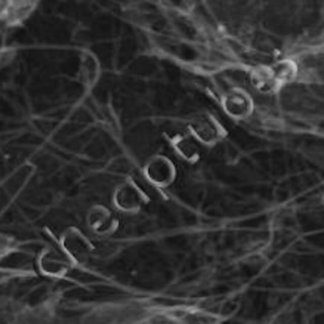
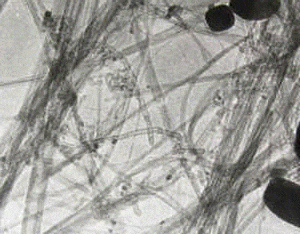
TEM micrographs, Raman spectra (RBM mode confirmation), and batch-specific Certificate of Analysis are added to product documentation as characterization is completed. Contact us for the latest QC package.
Application Areas
- Transparent conductive films (TCF) — spec-matched to ultra-long CNT TCF research (Dubnov 2025 + Tai & Lubineau 2016 Spotlight).
- EMI shielding films — high-aspect-ratio SWCNT for thin, lightweight shielding (Yang et al. Carbon 2023 Spotlight, 71 dB X-band SE).
- Silicon-anode coating for Li-ion batteries — SWCNT conductive backbone for high-cycle Si anodes (Gueon et al. ACS AEM 2024 Spotlight, 1,894 mAh/g at 300 cycles).
- Stretchable conductors, percolation networks, conductive composites at low loading — the high aspect ratio (50,000:1 to 100,000:1) lowers percolation threshold.
- Sensors, electrochemistry, fuel cell catalysis support — high SSA with low metal contamination for clean electrochemical baselines.
About the New Material
This is a next-generation single-walled carbon nanotube material delivering a substantial step-change in spec relative to the prior product line: pure single-walled chemistry, an order-of-magnitude longer tube length, near-theoretical specific surface area, and low residual metal content. The product is delivered as a dry black powder with uniform color and no hard lumps, packaged in a nano-suitable airtight container.
The combination of ≥100 μm tube length with 1-2 nm outer diameter gives an aspect ratio of 50,000:1 to 100,000:1 — among the highest in the commercial SWCNT supply chain. High aspect ratio is the single property that most directly improves the performance trade-off between conductivity and loading: longer tubes form percolating networks at lower volume fraction, which means lower mass for the same conductivity, less optical absorption in transparent applications, and better mechanical reinforcement at lower weight penalty.
Specific surface area of 800-1,400 m²/g approaches the theoretical maximum for single-walled carbon nanotubes (~1,315 m²/g), which is consistent with the purity claim — surface area drops sharply when amorphous carbon or multi-wall content is present. Residual metal impurity is low: Fe ≤ 5,000 ppm, Ni ≤ 600 ppm, Co ≤ 1,000 ppm — meaningfully lower than typical industrial-scale SWCNT supply where Fe routinely runs ~3 wt%.
Dispersion and Handling
Single-walled carbon nanotubes form tight bundles held together by van der Waals attraction. Dispersing them into a workable suspension requires breaking those bundles while protecting against re-bundling. Standard methods:
- Aqueous dispersion (research scale): tip-sonicate at 10-30 W/mL for 30-60 minutes in DI water with a surfactant such as SDS, SDBS, or sodium cholate (0.5-2 wt%); follow with mild centrifugation (10,000 g, 10-20 min) to remove residual bundles. PVP and CMC also work for matrix-compatible formulations.
- Solvent dispersion: NMP, DMF, and DMSO disperse pristine SWCNT without surfactant at low concentration (typically <0.5 mg/mL). For higher loading, use a surfactant-assisted route in water and exchange solvent post-dispersion.
- Polymer composites: three-roll milling or planetary mixing for high-viscosity systems; high-shear mixing (5,000-20,000 RPM) for low-viscosity resins. For aqueous-processable polymer hosts like PEDOT:PSS, use the COOH or OH variants (in stock soon) for surfactant-free dispersion.
- For functionalized chemistry needs: the COOH, NH₂, and OH variants of this material are being qualified and will be re-listed as available stock arrives. Contact us for samples and timeline.
Storage and Shelf Life
Sealed dry storage at room temperature. Stability testing supports a 6-year shelf life in the airtight container as shipped. Avoid prolonged air exposure once opened — pristine SWCNTs can pick up moisture and trace surface oxidation over time. Re-seal between uses; aliquot for high-frequency use to minimize headspace exchange.
Documentation
Every shipment includes:
- Safety Data Sheet (SDS) — OSHA HCS / GHS format.
- Technical Data Sheet (TDS) — representative purity, length, diameter, BET surface area, metal impurity.
- Certificate of Analysis (COA) — batch-specific, available on request.
- Sample-batch SEM and TEM micrographs — added to product documentation as the characterization package is finalized. Contact us for the latest QC package.
Samples are available on request for buyers evaluating the material against a specific application requirement.
Cited in research: Used by the Reichmanis group (Lehigh + Brookhaven National Lab + Stony Brook) as the SWCNT component of a stress-relieving PPBT/SWCNT coating for stable silicon microparticle anodes — 1,894 mAh/g reversible capacity at 300 cycles. Read the Si-Anode Spotlight — Gueon et al., ACS Applied Energy Materials 7(17), 7220-7231 (2024).