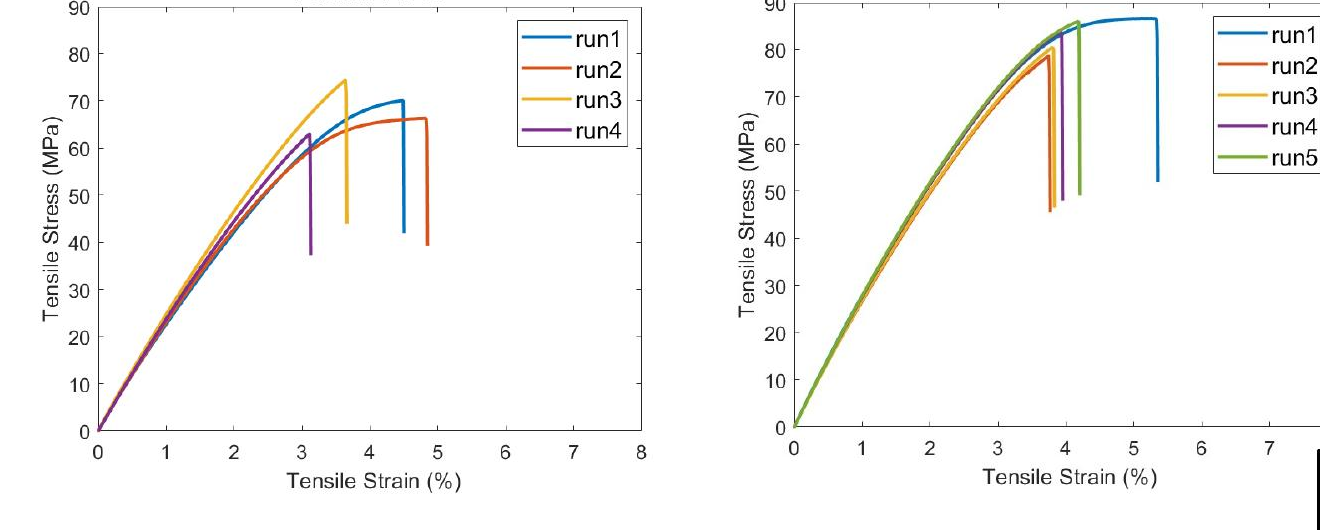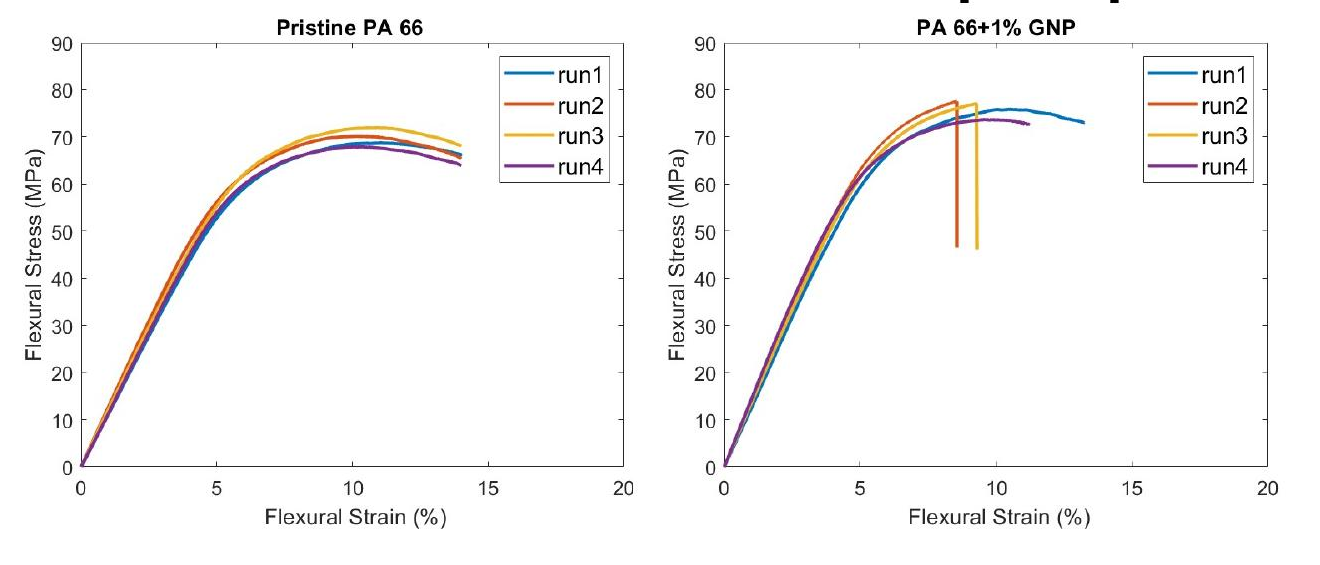
To put our patented Flexiphene graphene-surfactant technology to an unbiased test in an engineering thermoplastic, we compounded PA 66 (nylon 66) pellets with 1 wt% Flexiphene and sent the resulting material to the University of Massachusetts Lowell for independent third-party mechanical testing — without disclosing the loading or specifying what tests we expected to be performed. The results validate Flexiphene as a production-grade reinforcing additive for compression-molded and injection-molded PA 66.
68.5 → 83.1 MPa
2,473 → 2,888 MPa
1,157 → 1,376 MPa
68 → 76 MPa
The Research Question
Graphene reinforcement of engineering thermoplastics is a well-studied area in the academic literature, but commercial adoption has been limited by two persistent challenges: (1) graphene nanoplatelets tend to agglomerate in polar polymer matrices like polyamides, neutralizing the reinforcement benefit, and (2) conventional surfactants used to aid dispersion typically leave residues that compromise the polymer’s electrical, mechanical, or thermal properties.
Our patented Flexiphene amphiphilic graphene-surfactant technology was designed to solve both problems simultaneously. Flexiphene functionalized graphene nanoplatelets carry their own amphiphilic character — they self-disperse in polar matrices without external surfactants, and there is nothing extraneous to leave behind. The question we wanted to answer with this trial: would Flexiphene actually deliver measurable mechanical reinforcement of PA 66 at production-relevant loading (1 wt%), and would the result be visible in independent third-party testing where the lab did not know our hypotheses?
Materials and Methods
Cheap Tubes compounded production-grade PA 66 pellets with 1 wt% Flexiphene graphene nanoplatelets using our patented dispersion process. The resulting pellets — the same material now available for sale as our Flexiphene-Reinforced PA 66 Nanocomposite Pellets — were shipped to the engineering test lab at the University of Massachusetts Lowell along with a matching batch of neat PA 66 pellets to serve as the baseline. Importantly, we did not tell the lab what loading we had used or what specific tests we expected them to run. The lab designed the test program independently.
Sample preparation
- Pristine and filled PA 66 pellets were dried in a vacuum oven at 95 °C prior to molding.
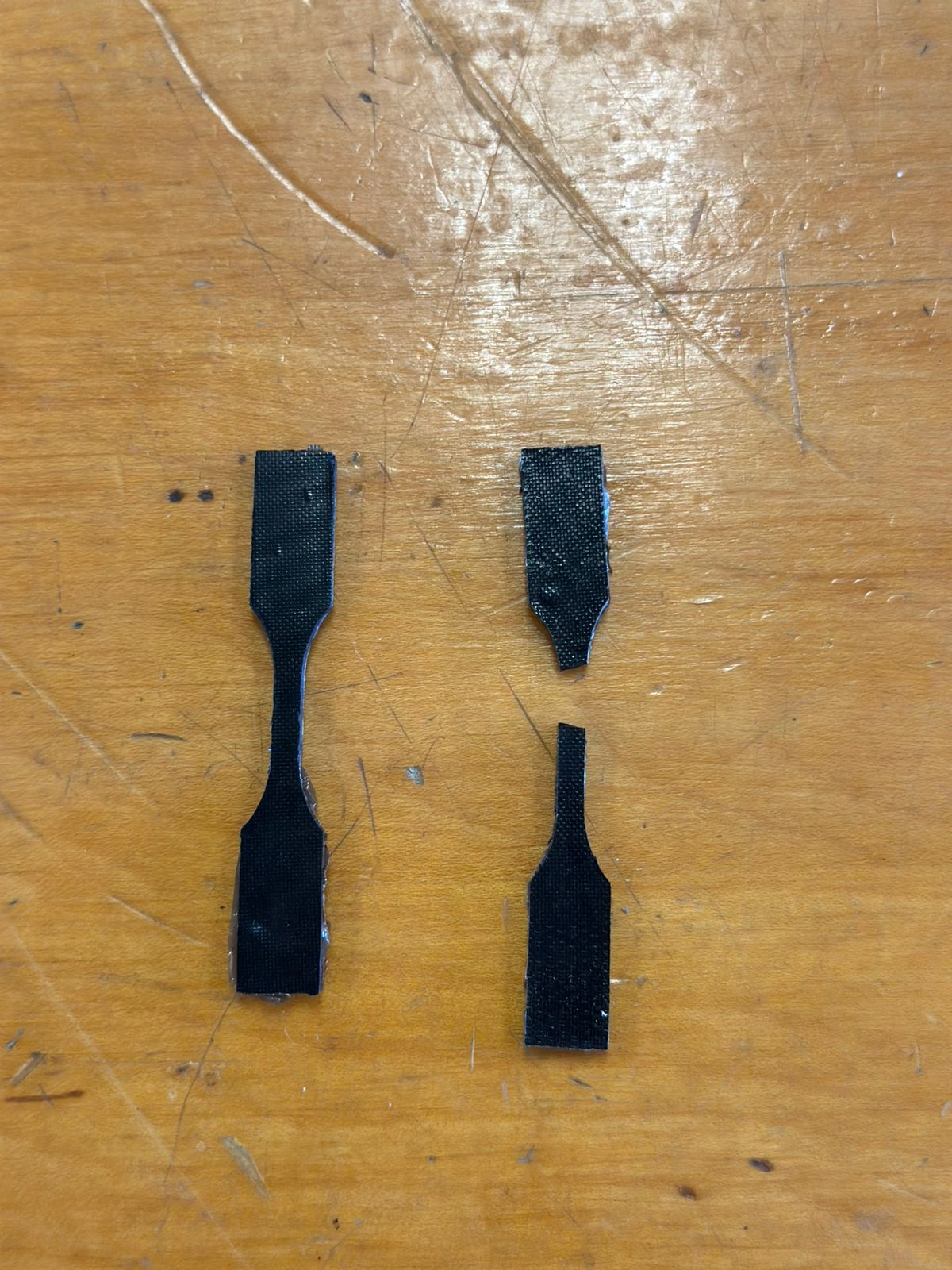
- ASTM Type V tensile specimens were compression-molded for tensile testing.
- ASTM-conforming flex bars were compression-molded for flexural testing.
Test methods
- Tensile testing on compression-molded ASTM Type V specimens at 10 mm/min displacement rate.
- Flexural testing on the compression-molded bars per ASTM D790, with span length ratio of 14:1 and displacement rate of 1 mm/min.
- Scanning electron microscopy (SEM) imaging of the freeze-fractured tensile dogbone surface to characterize the dispersion quality and identify any nanoparticle agglomeration.
Key Results — Tensile Properties
| Sample | Tensile Modulus (MPa) | Tensile Strength (MPa) | Elongation at Break (%) |
|---|---|---|---|
| Neat PA 66 | 2,473 | 68.5 | 4.03 |
| PA 66 + 1 wt% Flexiphene | 2,888 (±49) | 83.1 | 4.22 |
| Improvement | +16.8% | +19.0% | +4.7% |
At 1 wt% Flexiphene loading, tensile strength rose from 68.5 to 83.1 MPa — a 19% improvement — while tensile modulus rose from 2,473 to 2,888 MPa, an increase of 16.8%. Critically, the elongation at break did not decrease — in fact it increased slightly to 4.22% — meaning the stiffness and strength gains came without sacrificing ductility, which is the classic trade-off limitation of conventional rigid fillers in PA 66.
Key Results — Flexural Properties
| Sample | Flexural Modulus (MPa) | Flexural Strength (MPa) | Strain at Yield (%) |
|---|---|---|---|
| Neat PA 66 | 1,157 (±31) | 68 (±2.4) | 11 (±0.2) |
| PA 66 + 1 wt% Flexiphene | 1,376 (±55.2) | 76 (±1.2) | 9 (±0.8) |
| Improvement | +18.9% | +10.5% | slight reduction |
Flexural modulus rose 18.9% — matching the tensile modulus gain and confirming that the reinforcement effect is consistent across loading geometries. Flexural strength rose 10.5%. Strain at yield decreased modestly, which is consistent with the addition of a stiff reinforcing phase.
SEM Observations: Dispersion Quality
The mechanical property data tells you that Flexiphene works in PA 66. The SEM images tell you why: graphene dispersion is uniform at the matrix scale, with no detectable agglomerates. The lab’s verbatim conclusion was:
“Nanoparticle agglomeration was not observed under multiple magnifications.”
— University of Massachusetts Lowell engineering lab report
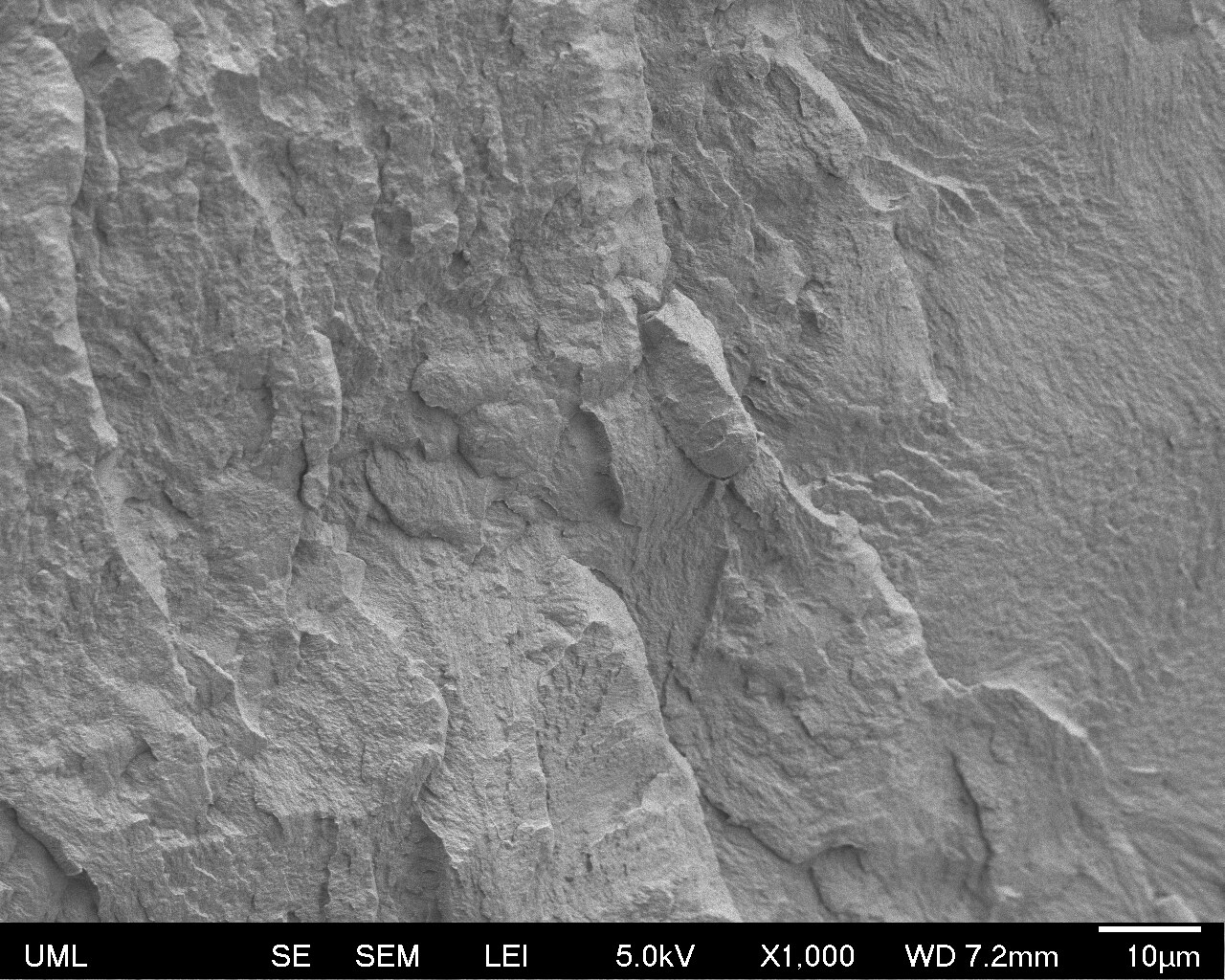
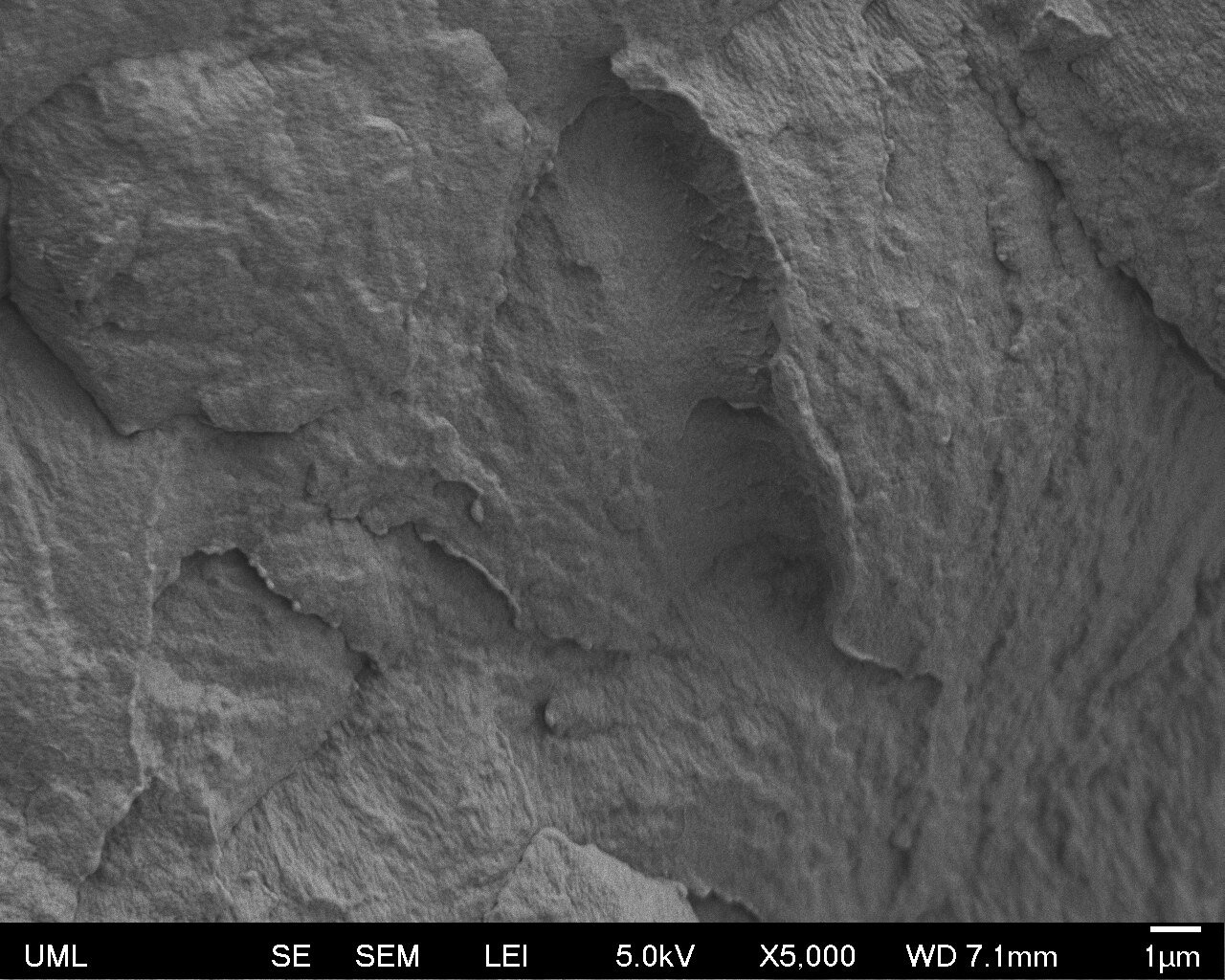
The contrast between the academic literature (where pristine GNPs in PA matrices routinely agglomerate at 1 wt% loading) and what we see here is the value proposition of Flexiphene. The amphiphilic surfactant character is built into the graphene itself — there is no separate additive to leave residue, and there is no need for a high-shear compatibilization step in the compounding process.
What This Means for Your Application
A 19% tensile strength gain at 1 wt% loading is commercially significant in engineering plastics. To put it in context:
- Material substitution: a 19% tensile strength increase often lets a structural component be downgauged or downsized while meeting the same load specification — reducing raw material cost and weight.
- Weight reduction: at 1 wt% graphene loading, the density of the composite is essentially unchanged from neat PA 66. The stiffness and strength gains come without a weight penalty.
- No glass fiber trade-offs: conventional glass-filled PA 66 grades give larger stiffness gains, but typically reduce ductility, increase processing wear on tooling, and cause visible surface anisotropy. The Flexiphene-PA 66 system preserves elongation at break (4.22% vs 4.03% neat) and is dimensionally isotropic.
- Compatible with standard PA 66 processing: the pellets are dried and processed using the same protocols you already use for neat PA 66. Compression molding worked at lab scale; twin-screw extrusion and injection molding follow the standard PA 66 thermal window.
This material is well-suited to applications where stiffness, strength, and dimensional stability matter and where conventional rigid fillers would compromise other properties: structural mechanical components, electrical housings, automotive under-the-hood parts, and consumer goods with high-touch surface finish requirements.
Buy the Validated Material
The pellets tested at UMass Lowell are now available for purchase in limited quantity from the same production batch. This is engineered material produced through our patented Flexiphene process — the only material on the market that combines verified graphene dispersion in PA 66 with the validated mechanical performance documented above.
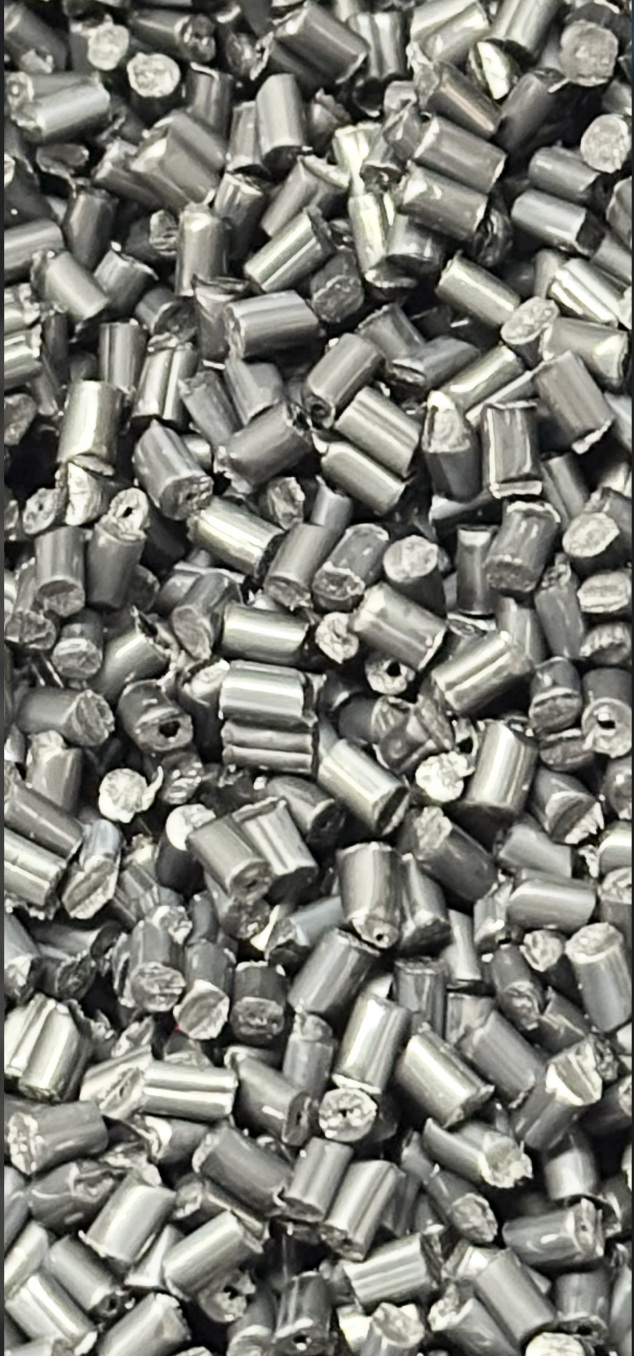
Flexiphene-Reinforced PA 66 Nanocomposite Pellets — 1 wt% Loading
Compounded with our patented Flexiphene graphene-surfactant technology. Independently validated at UMass Lowell with +19% tensile strength, +16.8% tensile modulus, +18.9% flexural modulus, and +10.5% flexural strength gains over neat PA 66. No nanoparticle agglomeration observed in SEM. Only 4 kg available.
500 g: $650 · 1 kg: $1,000 (better value per gram)
View Product & Buy → Discuss Production Scale-UpFrequently Asked Questions
What is Flexiphene?
Flexiphene is Cheap Tubes’ patented amphiphilic graphene-surfactant technology. It is a graphene nanoplatelet that carries its own amphiphilic surface character, allowing it to self-disperse in polar polymer matrices like PA 66 without external surfactants. Because there is no separate surfactant additive, there is nothing to leave behind that could compromise the polymer’s electrical or mechanical performance.
Why was the UMass Lowell testing blinded?
We deliberately did not tell the University of Massachusetts Lowell lab what graphene loading we had used or which specific tests we expected to be performed. This eliminates confirmation bias in the test design and reporting — the results are what an independent engineering lab measured against neat PA 66 baseline, not what we asked them to find. The lab independently selected ASTM Type V tensile specimens, ASTM D790 flexural testing, and SEM imaging.
What loading should I use in my application?
The validated loading is 1 wt%. The 4 kg of material currently available is at this loading. Higher and lower loadings are achievable through our compounding process and are quoted on request — contact us with your target loading and quantity. In the academic GNP-PA 66 literature, the typical optimum sits between 0.5 and 1.5 wt%; above ~2 wt% loading agglomeration tends to dominate and the reinforcement benefit drops off.
What processing methods does this material support?
The pellets were validated using compression molding at UMass Lowell. They are also compatible with standard twin-screw extrusion and injection molding using the conventional PA 66 thermal window. Drying at 95 °C in a vacuum oven before processing is recommended — the lab used this protocol prior to compression molding and it should be replicated before extrusion or injection molding.
Can I get more than 4 kg?
The 4 kg currently in inventory is from a single production run. Additional material can be produced through our patented Flexiphene process. Contact us for production-scale quotes — we can run custom loadings (e.g., 0.5 wt%, 2 wt%) and custom polymer matrices on request.
Are SDS and TDS available?
Yes. A material Safety Data Sheet (SDS) and Technical Data Sheet (TDS) including the UMass Lowell test results are included with every order. Additional characterization (XPS surface composition, SEM micrographs at additional magnifications) is available on request for qualification studies.
About This Test
All mechanical and SEM data on this page were generated by the engineering test lab at the University of Massachusetts Lowell in May 2024, using ASTM-conforming specimens compression-molded from pellets supplied by Cheap Tubes Inc. The lab was not informed of the graphene loading or our hypotheses prior to testing. The full lab presentation is available on request for qualification documentation. All graphs and tables on this page reproduce the lab’s measured values directly; Cheap Tubes has not edited or reinterpreted the source data.