
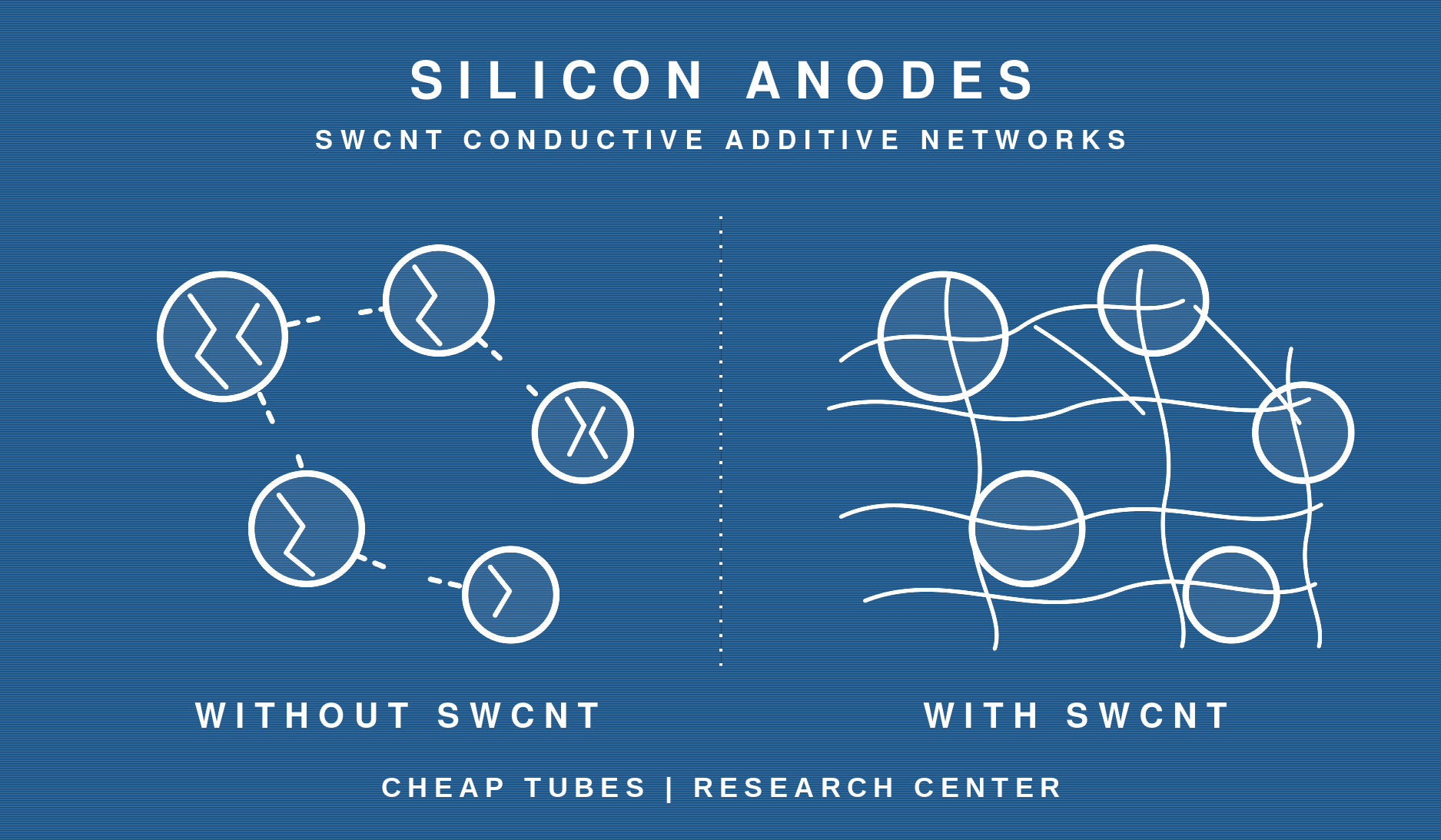
Your silicon anode program lives or dies on cycle life. Silicon swells roughly 300% on lithiation, electrodes crack, and capacity fades. A single wall carbon nanotube conductive additive is the lightest-touch fix available: a fraction of a percent of SWCNT builds a flexible conductive network that holds the electrode together while it breathes. This note covers what the additive does, which slurry grade fits your line, what loadings to run, and the representative data behind each claim.
What Does a SWCNT Conductive Additive Do in a Silicon Anode?
It builds a flexible 3D conductive network that buffers silicon volume expansion and prevents electrode pulverization during cycling. Long, high-aspect-ratio SWCNTs bridge across active-material particles, so electrical contact survives the swell-and-shrink cycle that breaks shorter conductive carbons loose. The same micro-conductive network lowers internal resistance, improves rate performance, and improves electrode mechanical integrity while freeing active-material volume that carbon black would otherwise occupy.
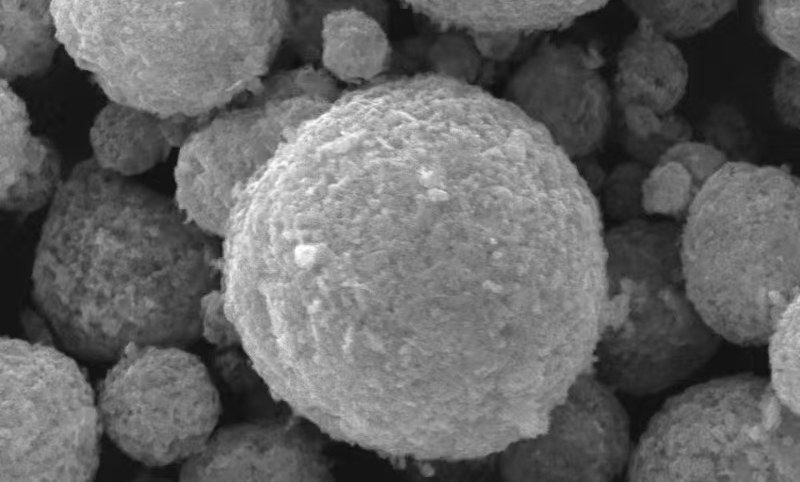
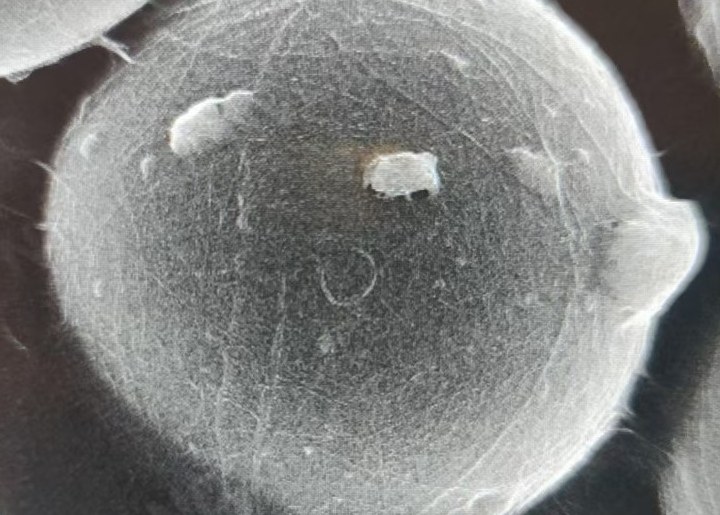
Representative Silicon Anode Cycling Data
Representative data from our production partners’ testing, coin-type half-cells, 2 wt% SWCNT incorporated into pure silicon anode material, cycled at 0.5C:
- Greater than 92% capacity retention after 100 cycles
- Coulombic efficiency approximately 99.95%
- Stable long-term cycling
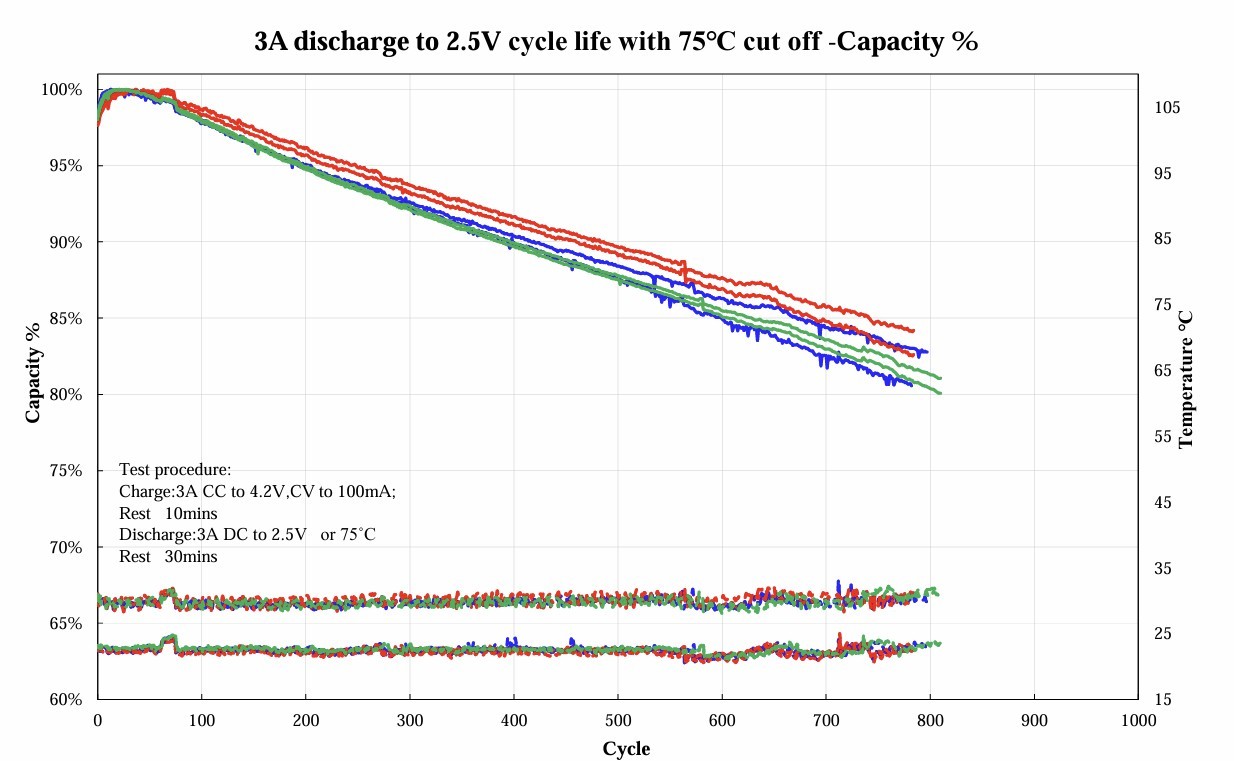
In prelithiated silicon-oxide and CVD silicon-carbon full cells (3 A and 1.5 A discharge to 2.5 V, 75 C cutoff), SWCNT-containing electrodes showed improved long-term capacity retention compared to cells without SWCNT.
All values are representative of typical results, not lot guarantees. Application results depend on formulation, equipment, and process conditions; confirm with your own trials.
Which Slurry Grade Fits Your Electrode?
Two ready-to-use slurry forms cover PVDF and aqueous lines; both disperse SWCNT at high aspect ratio. The CTIS slurries and the powder grades behind them are the commercial product family available through CTI Materials.
| Code | Medium | SWCNT grade | Solids content | Intended use |
|---|---|---|---|---|
| CTIS-NMP | NMP (PVDF-compatible dispersant) | CTI600 / CTI2000 | To customer specification | NMC/NCA/LFP cathodes, PVDF systems |
| CTIS-AQ | Water (CMC/aqueous binder compatible) | CTI2000 | To customer specification | Si, Si-graphite and graphite anodes; Na-ion; foil primer coatings |
Download the High Purity SWCNT Powders TDS (PDF) for full specifications across all seven grades, from research quantities to battery scale.
The base powders behind these slurries, part of the same CTI Materials family: CTI600 runs under 600 ppm iron for high-nickel cathodes and cell designs sensitive to transition-metal dissolution; CTI2000 runs under 2,000 ppm iron for silicon and silicon-graphite anodes, sodium-ion electrodes, and LFP.
What Loading Should You Run?
Start your silicon anode evaluation around 2 wt% SWCNT; that is the loading behind the representative cycling data above. For cathodes, 0.1 to 0.5 wt% SWCNT builds a percolating conductive network that improves rate capability and cycle life versus carbon black or MWCNT.
Beyond Silicon: Where Else the Slurries Earn Their Keep
- Sodium-ion electrodes. Representative comparison of SP+SWCNT versus SP+MWCNT formulations (1.5 to 3.4 V window): areal density up 7%, active-material loading 96.75% versus 95%, cold-pulse voltage up 100 mV at -18 C and 170 mV at -30 C (6C, 10 s), compaction density 2.05 versus 2.0 or below, with flexibility and adhesion passing where the MWCNT build failed. SWCNT also raised the -18 C, 100% SOC, 6C pulse voltage by 80 mV, and the network cushions the larger volume change of sodium-ion materials.
- Carbon-coated current collector foils. SWCNT slurry reinforcement raised MD tensile strength up to roughly 200% on 4 um aluminum foil (67.34 MPa bare, 144.95 MPa with 1 um coating, 270.11 MPa with 2 to 3 um coating), with similar gains on 8 and 12 um Al and 6 and 8 um Cu foils. Thinner foils mean higher energy density, better adhesion, corrosion protection, and mitigated thermal-runaway risk.
- Dry-process electrodes. The extremely high aspect ratio forms a penetrating conductive path at low dosage. The fibrous structure adds bonding and reinforcement, addressing brittleness, powder shedding, and delamination at high compaction density, with good compatibility in mixing, film-forming, and rolling.
- Solid-state batteries. SWCNT improves solid-solid interfacial contact and both electronic and ionic conductivity in composite electrodes.
- Tab coatings. Conductive tab coatings reduce contact resistance.
Evaluating Alternatives to Bundled SWCNT Additives
If your line already runs a bundled SWCNT product such as OCSiAl TUBALL, the variable worth isolating is dispersion state, not chemistry. Bundled and individually dispersed SWCNTs are the same carbon; what differs is how much of each gram actually reaches the electrode as separated, network-forming tubes. Teams searching for an OCSiAl replacement or a TUBALL alternative get the cleanest answer from a controlled A/B: same active material, same binder system, same coating line, swap only the conductive additive, and measure retention, rate, and adhesion. The CTIS slurries arrive pre-dispersed at high aspect ratio, so the comparison starts from a known dispersion state instead of depending on your in-house deagglomeration step. For the mechanics of why dispersion state moves results, see our guide: bundled vs. individually dispersed carbon nanotubes.
How Do You Handle and Let Down the Slurry?
Store sealed at 5 to 30 C and re-disperse by gentle stirring before use; no re-milling is required. Shelf life is 6 months sealed. Solids content is set to customer specification, so the slurry drops into your existing mix recipe rather than forcing a reformulation. For the NMP grade, see the SDS for solvent handling.
Documentation and Quality
- ISO 9001 certified production, from evaluation quantities through multi-ton annual supply agreements
- Representative Certificate of Analysis with each lot
- Raman, TGA, and SEM/TEM data available on request
- SDS library
Where to Get It
Two doors, depending on where your program stands:
- Research and evaluation quantities are available now from Cheap Tubes. Start with our single walled-double walled carbon nanotubes or browse the SWCNT category.
- Battery and volume programs (CTIS slurries and CTI600/CTI2000 powder grades at pilot through multi-ton scale) are quoted through CTI Materials. Tell them your chemistry (Si, Si-graphite, graphite, Na-ion, or cathode), your binder system (PVDF or aqueous), and your monthly volume, and they will spec the right grade and solids content for your line.