Description
When surface area is the performance bottleneck — supercapacitor development, battery electrode materials, catalyst supports, or adsorbent research — you need exfoliated reduced graphene oxide with verified few-layer structure and high BET surface area. Most rGO collapses back into thick stacks during handling.
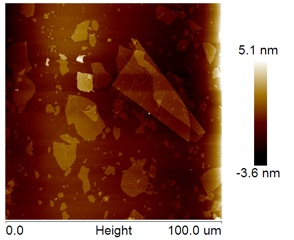
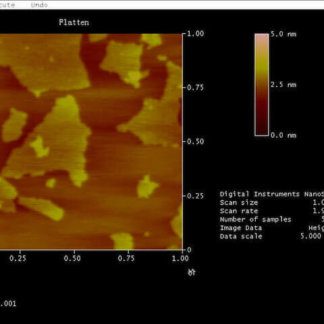
Our exfoliated rGO powder retains few-layer morphology (≤ 6 layers by AFM) with BET surface area ≥ 400 m²/g — delivering the active sites your application needs, whether that’s ion accessibility in a supercapacitor electrode, catalyst dispersion, or analyte binding in a sensor.
Specifications
| Property | Specification | Unit | Method |
|---|---|---|---|
| Few-Layer Graphene | ≤ 6 | Layer | AFM |
| Appearance | Black Powder | — | Visual |
| Tap Density | ≤ 0.02 | g/cm³ | Tap density meter |
| Specific Surface Area | ≥ 400 | m²/g | BET |
| Carbon Content | ≤ 90.0 | % | Element Analyzer |
| Oxygen Content | ≥ 10.0 | % | Element Analyzer |
| Nitrogen Content | ≤ 2.5 | % | Element Analyzer |
| Hydrogen Content | ≤ 2.5 | % | Element Analyzer |
| Ash | ≤ 2.5 | % | ASTM C561 |
Structural Characterization
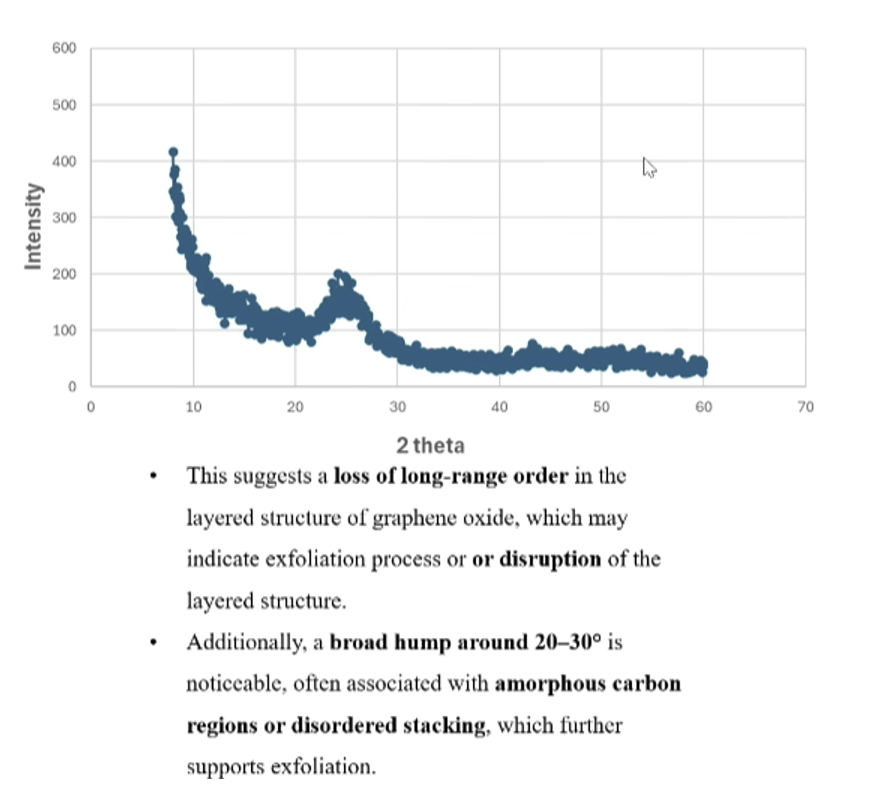
XRD of exfoliated rGO shows a loss of long-range order in the original layered GO structure — the sharp (001) GO peak is absent, replaced by a broad hump around 20–30° 2θ associated with amorphous carbon regions and disordered stacking. This signature confirms successful exfoliation + partial reduction.
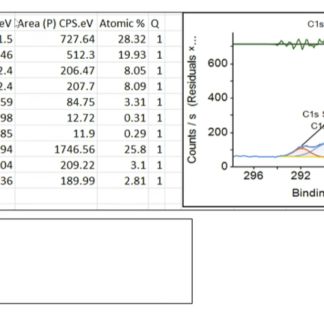
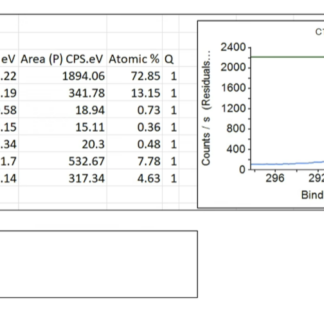
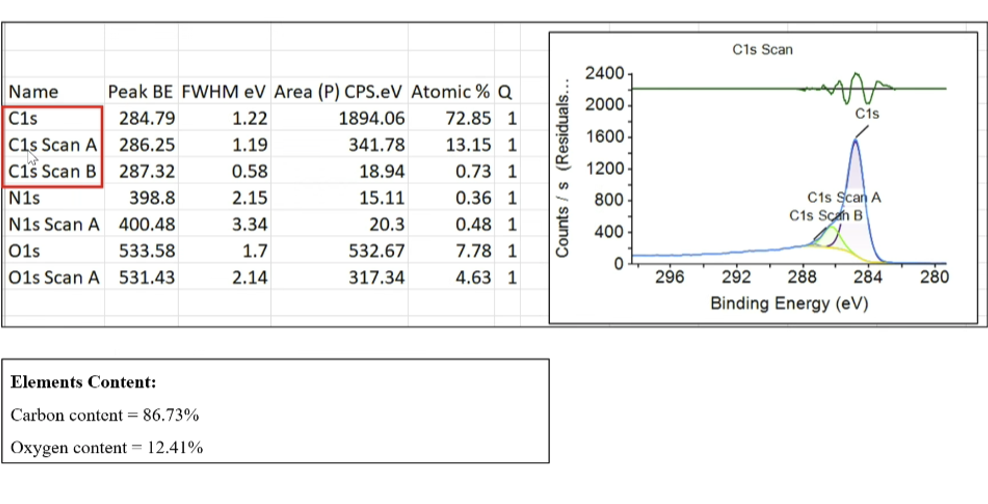
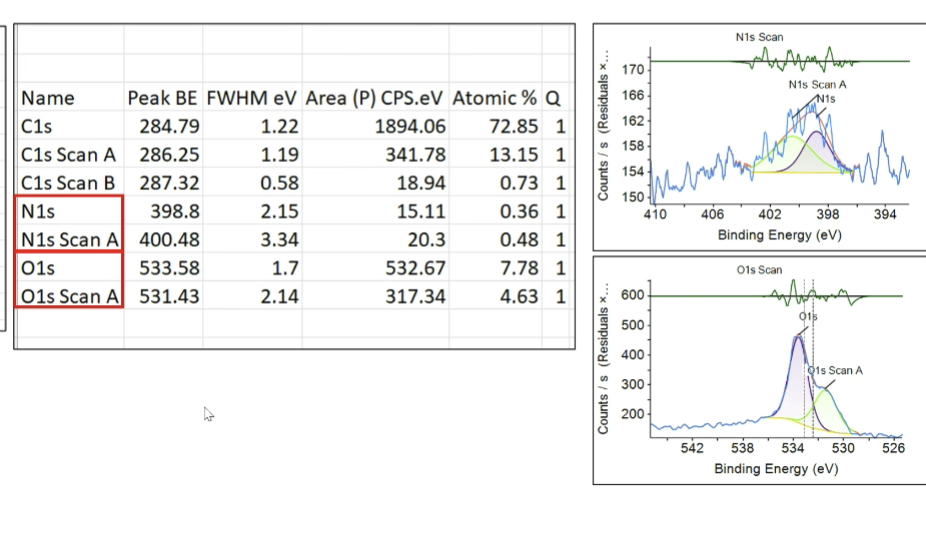
XPS: Carbon 86.73%, Oxygen 12.41%. Retained oxygen functional groups (C–O at 286.25 eV, C=O at 287.32 eV) keep the surface hydrophilic and functionalizable while the core sp² domain (284.79 eV, 72.85 atomic %) provides electrical conductivity.
Applications
- Supercapacitor electrodes — high BET surface area maximizes EDLC capacitance
- Battery electrode materials — lithium-ion and lithium-sulfur cathode/anode research
- Catalyst supports — metal nanoparticle anchoring for heterogeneous catalysis
- Adsorbent research — water purification, heavy metal sorption, organic pollutant removal
- Gas sensors — exposed edge sites for analyte binding
- Thermal and electrical composites — where exfoliation improves filler dispersion
How to Order
- Research quantities ship from our Townshend, Vermont facility — typical lead time 2–5 business days
- Custom layer counts, surface functionalization, or bulk orders: request a quote
- Every order includes a Technical Data Sheet (TDS) and Safety Data Sheet (SDS)
- Published-specs guarantee — if the material doesn’t meet the spec, we replace it or refund you
Not sure which grade fits your work? Compare in the graphene oxide product line, or see our carbon allotrope guides for background on 2D carbon materials.
Download the Industrial GO and rGO TDS (PDF) for full specifications.